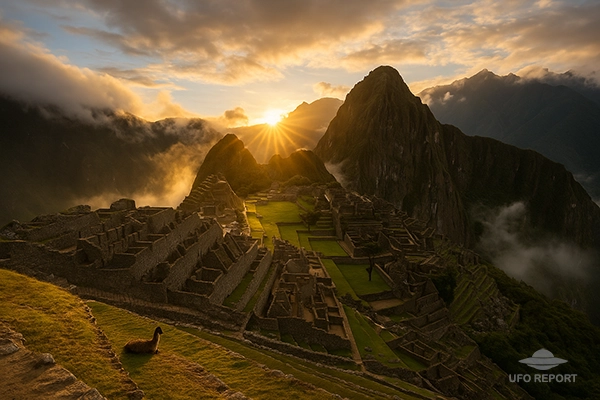
High in the folds of the Andes, where the earth meets the sky, lies a city that was never meant to be found. Machu Picchu, the hidden citadel of the Inca, rises from mist and stone like a memory that refuses to fade. Perched 7,970 feet above sea level, it has endured five centuries of silence, conquest, and rediscovery. To walk among its terraces is to feel time suspended, the whisper of a civilization that once touched both mountain and cosmos.
The City Above the Clouds
In the 15th century, at the height of the Inca Empire, Emperor Pachacuti Inca Yupanqui ordered the construction of a royal estate unlike any before it — a sanctuary above the clouds. Hidden among steep cliffs and wrapped in perpetual mist, Machu Picchu became both fortress and refuge, a secret held by the mountains.
Its isolation was its salvation. When Spanish conquistadors swept through the Andes, burning temples and erasing names, Machu Picchu remained unseen — its existence preserved by distance, vegetation, and reverence. For centuries it slumbered beneath vines and moss, known only to local farmers and shepherds.
Then, in 1911, the American explorer Hiram Bingham stumbled upon it. Guided by Quechua villagers, he climbed through the mist and emerged into sunlight — and there, he wrote, “stood walls of cut stone, terraces green with grass, and temples older than memory.” The world called it “The Lost City of the Incas,” but to the people of the Andes, it had never been lost. It had simply been waiting to be remembered.
Architecture of the Sacred
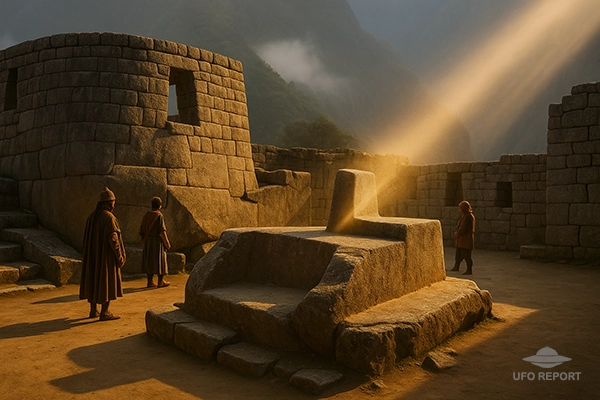
Every stone of Machu Picchu was laid with devotion. The Incas built not on the mountain, but into it — sculpting terraces, stairs, and temples that seem to grow from living rock. Using nothing more than stone tools and human precision, they created seamless walls of granite, carved so precisely that no mortar was needed.
The site contains over 200 structures — palaces, shrines, observatories, and homes — organized in perfect harmony with the landscape. Its design follows the principles of sacred geometry, aligning with the cardinal directions and celestial cycles. The Temple of the Sun, a semicircular structure overlooking the valley, captures the sunrise during the winter solstice. Nearby, the Intihuatana Stone — literally “the hitching post of the sun” — served as both clock and compass, marking equinoxes with mathematical perfection.
Yet Machu Picchu was not merely a feat of engineering. It was a work of faith. The Incas believed that every mountain, river, and stone possessed spirit — camac, the divine essence that flows through all things. To build was to honor that essence. The city’s terraces were offerings, its water channels prayers in motion, its architecture a dialogue with the divine.
Here, geometry was theology. Every shadow, every line of sight, every shaft of light was designed to reflect the order of the heavens — proof that the Inca were not only master builders, but cosmic thinkers.
The Heart of Heaven and Earth
At the core of Machu Picchu lies a question — why was it built?
Some scholars believe it was a royal retreat, a sanctuary for Pachacuti’s lineage where priests performed rituals honoring Inti, the sun god. Others see it as a pilgrimage site, a ceremonial node in the sacred geography of the Andes, connecting Cusco — the “navel of the world” — with the snowcapped peaks revered as apus, or mountain deities.
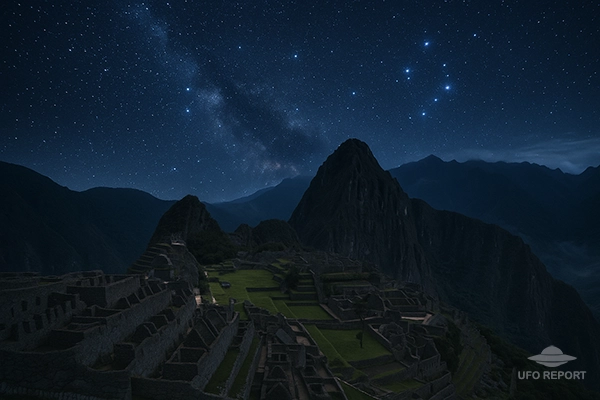
But perhaps Machu Picchu was something greater — a bridge between heaven and earth. Its layout mirrors the Andean cosmos: the condor (sky), the puma (earth), and the serpent (underworld). In the movement of its stairways and terraces, one can trace the Incan concept of ayni — balance and reciprocity between humans and nature.
During solstice ceremonies, priests stood before the Intihuatana Stone to “tie the sun” to its celestial path, ensuring the world’s renewal. Farmers observed its shadows to track planting seasons; astronomers aligned its temples to the constellations. The city itself was alive — a living observatory tuned to the rhythms of the cosmos.
Here, faith was not confined to temples. It was built into the horizon.
A Civilization in Harmony
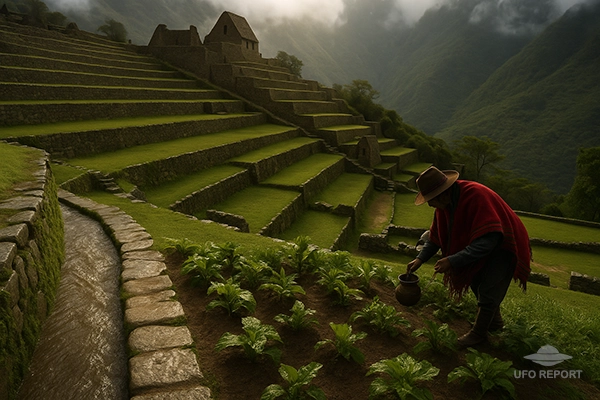
Machu Picchu’s brilliance lay not only in its grandeur but in its sustainability. The Incas understood the fragility of mountain life and designed their city to exist in perfect ecological balance. Its terraces prevented erosion, its aqueducts captured and redirected rainfall, and its drainage systems — still functional today — channeled water through the steep terrain without waste.
The surrounding cloud forest teems with orchids, ferns, and birds, part of a living ecosystem that the Inca considered sacred. They saw themselves as caretakers of Pachamama, the Earth Mother — a responsibility, not a right. Every harvest began with offerings to the soil; every stone laid was a covenant with the land.
Today, that same philosophy endures among the Quechua people, descendants of the Inca. Rituals of thanksgiving are still performed in the valleys below, where farmers sprinkle chicha (corn beer) on the ground before planting. To them, Machu Picchu is not a ruin — it is a temple that still breathes, a guardian of the balance between progress and reverence.
And yet, this harmony is now at risk. Tourism, erosion, and climate change threaten to erode what time could not. Preservation efforts led by Peruvian archaeologists and local communities seek to protect what remains, proving that the legacy of the Incas is not just what they built, but what they taught: that civilization thrives only when it lives in rhythm with the earth.
The Memory of the Sun
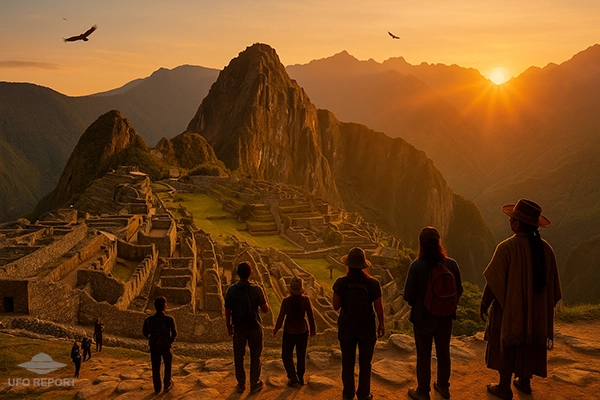
At sunrise, the first light of day touches Machu Picchu like a benediction. The stones warm, the mist lifts, and the city emerges — ancient yet eternal. Visitors stand in silence, cameras forgotten, as if witnessing not ruins, but resurrection.
Machu Picchu endures because it embodies something universal — the human longing to create meaning beyond mortality. The Incas built not to dominate nature, but to converse with it. They left no written language, yet their message survives in stone: that beauty and balance are the truest forms of power.
Hiram Bingham once described Machu Picchu as “a work of art greater than anything imagined by man.” But perhaps it was not art alone. Perhaps it was a prayer — a reminder that what is built with purpose and humility can outlast empires, storms, and time itself.
The city in the clouds still remembers. It waits not for discovery, but for understanding — for us to listen as the wind moves through its stones and whispers the truth the Inca always knew:
That the earth does not belong to us — we belong to the earth.