

On April 24, 1964, the quiet desert town of Socorro, New Mexico, became the setting for one of the most enduring and perplexing UFO encounters in modern history. What began as an ordinary day for a police officer on patrol would evolve into a case that remains unsolved nearly six decades later — a story backed by physical evidence, credible witnesses, and even official investigation by the U.S. Air Force
.Known today as The Lonnie Zamora Incident, it continues to stand as one of the few UFO cases never conclusively debunked, long after others have faded into folklore.
A Routine Patrol Turns Extraordinary
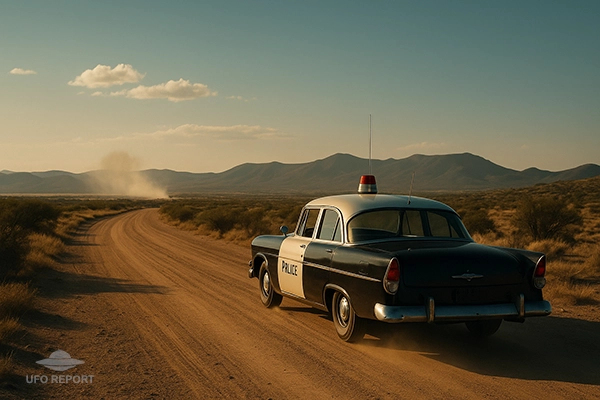
Officer Lonnie Zamora, a respected member of the Socorro Police Department, was on duty late that spring afternoon when he heard a loud roar echo across the mesa. At first, he believed it might be an explosion at a nearby dynamite shack — a reasonable concern given the area’s rugged mining and construction activity. Zamora turned his patrol car off the main road and began driving toward the source of the sound, dust kicking up behind him on the uneven desert track.
As he crested a small rise, something unexpected appeared in the distance. Roughly two hundred yards away, he saw what he first thought was an overturned car — until it began to shimmer in the sunlight. The object was oval-shaped, resting on four legs, with a smooth metallic finish that reflected the desert’s golden light.
Then Zamora noticed something else: two small figures, dressed in what looked like white coveralls, standing beside the craft.
The Moment of Contact
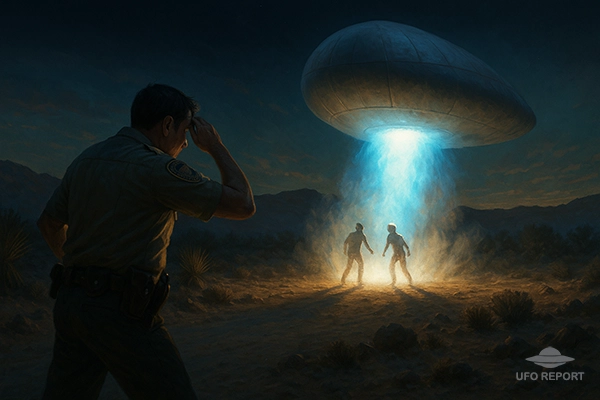
Curious but cautious, Zamora radioed his dispatcher to report a possible vehicle accident before stepping out of his car for a closer look. That’s when the situation changed abruptly. The beings — humanlike, though smaller in stature — turned in apparent alarm. Seconds later, a loud roar erupted, accompanied by a bright blue-white flame beneath the craft.
Startled, Zamora took cover behind his car as the noise intensified. He later described the sound as “a loud, continuous roar, not like a jet… more like a high-pitched whoosh.” When he dared to look again, the object was rising into the air, its legs retracting as it lifted smoothly off the ground. Within seconds, it cleared a nearby hill and vanished silently into the sky, leaving behind the smell of burnt vegetation and a lingering sense of disbelief.
Shaken and sweating, Zamora called for backup. The first to arrive was Sergeant Sam Chavez, who found his colleague pale and visibly rattled — not the demeanor of someone prone to exaggeration. What they discovered at the site would soon turn a personal encounter into a national investigation.
Physical Evidence in the Desert
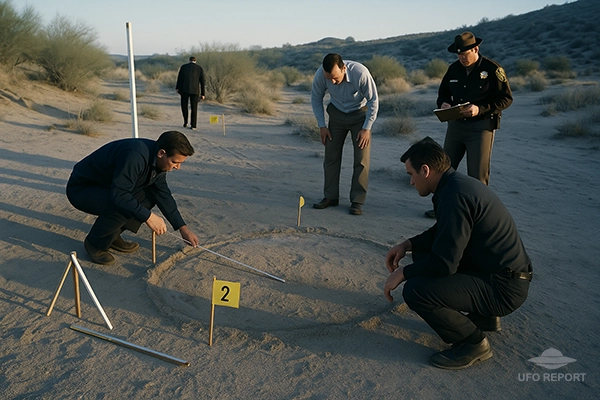
Unlike many UFO reports of the era, the Socorro incident came with something tangible: trace evidence. At the site, investigators documented four distinct landing impressions in a roughly rectangular pattern, consistent with the object’s described shape.
Charred bushes and scorched sand surrounded the area, and laboratory analysis later confirmed exposure to high temperatures — far beyond what local vegetation fires could produce.
Zamora’s police training led him to observe methodically despite his fear. He noted the object’s strange insignia, a red, V-shaped marking with an arrow-like line running through it — details he would repeat consistently for years. His testimony was so clear that the Air Force later commissioned an artist rendering of the symbol for official files.
Word spread quickly. Within hours, local newspapers and radio stations were reporting that a police officer had witnessed a “landed spacecraft.” By the next morning, military officials were on their way to Socorro.
Project Blue Book and Dr. J. Allen Hynek
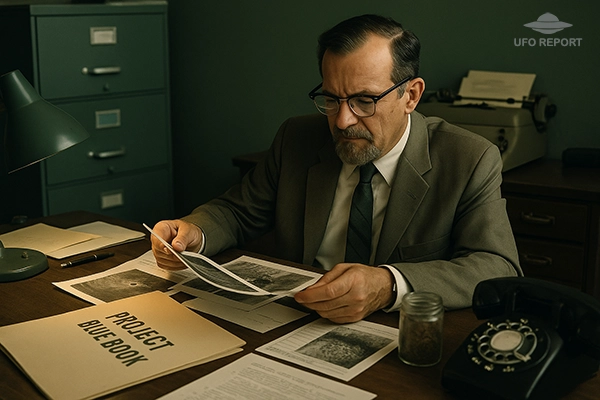
The U.S. Air Force’s Project Blue Book, its official UFO investigation program, dispatched officers from Kirtland Air Force Base to examine the site. Among them was Dr. J. Allen Hynek, an astronomer and scientific consultant who had reviewed hundreds of sightings for the government. Hynek later wrote that Zamora was “an unimpeachable witness — level-headed, conscientious, and clearly frightened by what he saw.” He was particularly struck by the physical evidence, which seemed inconsistent with any known aircraft or prank.
Investigators interviewed nearby residents, pilots, and military personnel to rule out experimental aircraft or missile tests. No records matched the time or description. The Air Force conducted soil and radiation tests, interviewed Zamora multiple times, and consulted Lockheed and NASA engineers. Despite exhaustive inquiry, no conventional explanation was ever determined.
When Blue Book closed its file, the case remained listed as “Unidentified.” Hynek himself would later cite Socorro as one of the strongest cases supporting the existence of genuinely unexplained aerial phenomena — not simply because of the witness, but because of the empirical consistency between testimony, trace evidence, and investigation.
Theories and Counterarguments
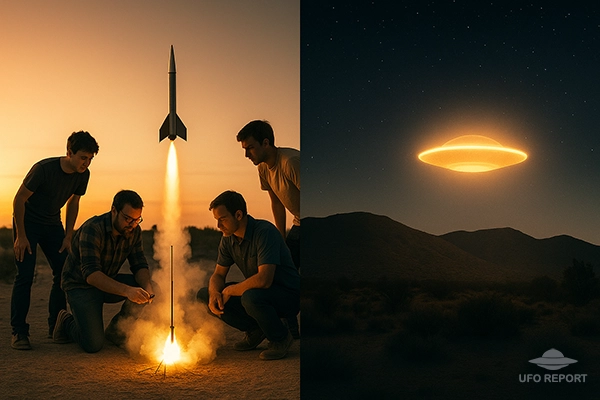
Over the years, skeptics have offered various theories to explain the Socorro incident — none of which have held up to full scrutiny. Some suggested that Zamora had been the victim of a prank, possibly staged by nearby college students experimenting with rockets or balloons. Yet no credible confession or corroborating evidence ever emerged, and the technology required to simulate the event so precisely in 1964 would have been difficult to conceal.
Others proposed that the object might have been a prototype lunar lander or military test vehicle. However, officials from White Sands Missile Range and Holloman Air Force Base — both nearby — firmly denied any such operation taking place that day. The flame’s color, the sound, and the behavior of the object didn’t match known rocket or jet propulsion systems.
To believers, the Socorro case stands as one of the most compelling “close encounter of the second kind” events on record — involving both a credible witness and verifiable environmental effects. To skeptics, it remains an unsolved but terrestrial mystery — perhaps an experimental craft so secret that even official channels were left unaware.
Legacy and Cultural Impact
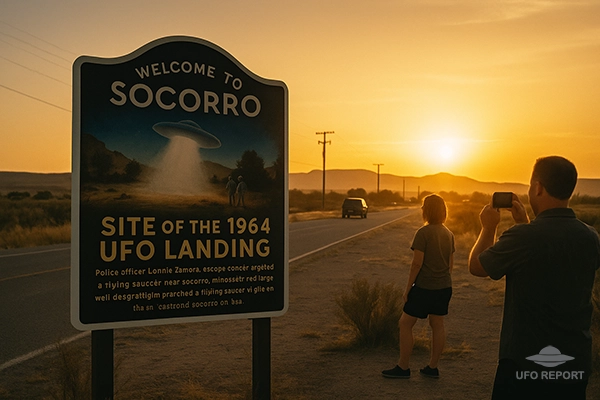
In the decades since, the Lonnie Zamora incident has become a cornerstone of UFO lore — not for sensationalism, but for its measured, evidence-based nature. Unlike many contact stories of the 1950s and 60s, Zamora never sought fame or profit. He rarely granted interviews and expressed frustration that the event had disrupted his quiet life. “I wish I’d never seen it,” he once told a reporter. “It only brought me trouble.”
Yet his honesty left an impression on investigators and locals alike. Socorro, now known for its connection to the case, quietly honors the event with historical plaques and annual gatherings of researchers who continue to revisit the site. Dr. Hynek’s assessment of the case — that it was both credible and unexplained — continues to appear in serious discussions of UAP (Unidentified Aerial Phenomena) decades later, even as new military and scientific programs revisit the question of what’s in our skies.
A Quiet Town, an Unquiet Memory

Today, Socorro remains a peaceful desert town, its windswept mesas largely unchanged since 1964. Yet the mystery endures.
For those who study the history of UFO encounters, the Lonnie Zamora case stands out for its simplicity and sincerity — a single man, doing his duty, confronted by something beyond explanation.
Was it a secret experiment, a hoax, or a genuine visitation from beyond our world? We may never know. But as the desert sun dips below the horizon and the stars reappear over Socorro, one thing remains certain: Lonnie Zamora’s quiet encounter ensured that this small New Mexico town will forever hold a place among the most enduring mysteries of the UFO era.