
Life on Earth began in the most unlikely of places — deep in the oceans, near hydrothermal vents, long before sunlight ever touched the first living cells. That origin story has reshaped the way scientists search for life beyond our planet. Instead of looking only for Earth-like atmospheres or warm surface oceans, researchers now explore worlds where liquid water may be hidden beneath ice, where geothermal activity could sustain ecosystems, and where sunlight is optional rather than required.
In the past two decades, the number of promising candidates for extraterrestrial life has grown dramatically. Some exist right here in our solar system. Others orbit distant stars dozens or even hundreds of light-years away. Each world presents its own challenges and mysteries, yet all of them share one crucial trait — the potential to harbor liquid water, the single most fundamental ingredient for life as we know it.
This article explores the top five planetary bodies most likely to contain life based on modern astrobiology: Europa, Enceladus, Mars, Proxima Centauri b, and Kepler-62f.
Together, they form a roadmap for humanity’s greatest scientific quest: discovering whether we are truly alone.
1. Europa: Jupiter’s Ocean World

Europa, one of Jupiter’s largest moons, has become one of the most compelling contenders in the search for life. Although its icy surface appears cold and barren, beneath that crust lies a deep global ocean, potentially holding more water than all of Earth’s oceans combined.
A Hidden Ocean Teeming with Potential
NASA scientists widely agree that Europa’s ocean is kept warm by tidal flexing — gravitational stretching caused by Jupiter’s immense pull. This constant kneading generates internal heat, likely fueling:
- Hydrothermal vents, similar to those on Earth
- Mineral-rich chemical gradients that can power metabolism
- Warm pockets where microbial life could thrive
These vents are especially significant because Earth’s earliest known organisms lived in similar environments.
Signs of Possible Habitability
Europa’s surface also contains:
- Salts and organics pushed up through cracks
- Water vapor plumes erupting into space
- A thin oxygen atmosphere, produced by surface chemistry
If plumes contain organic materials or unusual chemical signatures, they could act as “samples” from the hidden ocean below.
Upcoming missions — such as NASA’s Europa Clipper — may finally determine whether Europa hosts the chemistry of life.’re lucky, it may find organic molecules being ejected into space — a cosmic fingerprint of something living below.
👉 Read more: [Exploring Europa: Jupiter’s Icy Moon With a Real Possibility of Life]
2. Enceladus: Saturn’s Reflective, Life-Bearing Snow Globe

If Europa is the king of ocean worlds, Enceladus is its energetic younger sibling — smaller, colder, but just as fascinating. Enceladus, a small moon of Saturn, would seem insignificant at first glance — a frozen ball only 300 miles wide. But in 2005, NASA’s Cassini spacecraft discovered something astonishing: towering geysers shooting water vapor, salts, and organic molecules into space.
A Global Subsurface Ocean
Like Europa, Enceladus hides a warm ocean beneath its icy crust. But Enceladus has done something Europa has not: it has directly sprayed its ocean into space, allowing Cassini to fly through the plumes and analyze them.
What Cassini found was extraordinary:
- Salty water, confirming a subsurface ocean
- Hydrogen gas (H₂), a byproduct of hydrothermal activity
- Complex organic molecules, including carbon-rich compounds
Hydrogen gas is important because it can act as a food source for microbial life near hydrothermal vents — exactly the environment theorized for life’s origins on Earth.
Why Enceladus May Be the Most Promising World of All
Unlike Europa, Enceladus allows scientists to study its ocean without drilling through miles of ice. Future missions could fly through its geysers again, using more advanced instruments to search for biosignatures — or even microbial cells.
Among all worlds in our solar system, Enceladus currently provides the strongest chemical evidence for potential life.
👉 Read more: [Enceladus: Exploring Saturn’s Enigmatic Moon with the Potential for Extraterrestrial Life]
3. Mars: A Planet With a Watery Past
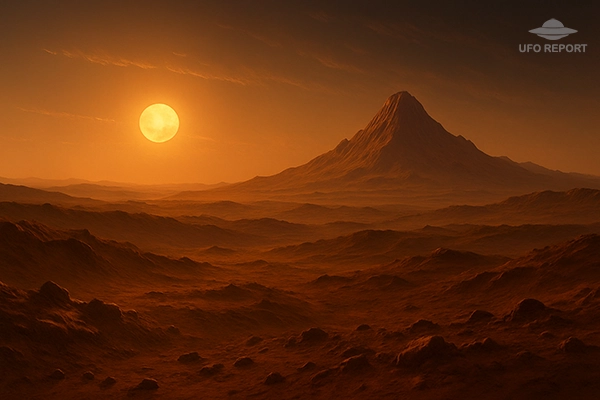
Mars has captivated human imagination for centuries, and for good reason. Billions of years ago, Mars had rivers, lakes, Mars has long fascinated humanity as a possible former — or current — home for life. Billions of years ago, Mars was dramatically different:
- It had rivers, lakes, and possibly a northern ocean
- It had a thicker atmosphere
- It had a magnetic field protecting it from solar radiation
In short, early Mars looked more like early Earth.
Clues Locked in Martian Rocks
NASA rovers — including Curiosity, Perseverance, and Opportunity — have found:
- Streambeds and delta formations
- Clay minerals requiring long-term water
- Organic molecules in Martian soil
- Methane spikes, which may be geological… or biological
Methane is especially intriguing because on Earth it is strongly associated with microbial life. While geological processes can produce methane, the seasonal variations seen on Mars remain unexplained.
Subsurface Life: The Leading Theory
Today, Mars is cold and its surface is blasted with radiation. But the subsurface may still hold brines — salty, liquid water pockets.
Life, if it exists on Mars today, is most likely:
- Microbial
- Subterranean
- Adapted to extreme dryness and salt
Upcoming sample-return missions may finally answer whether Mars once hosted life — or still does.
👉 Read more: [Mars, The Red Planet]
4. Proxima Centauri b: Our Closest Potentially Habitable Exoplanet

Orbiting Proxima Centauri, the nearest star to the Sun, Proxima b lies only 4.24 light-years away — practically next door in cosmic terms.
A Rocky Planet in the Habitable Zone
Proxima b is especially compelling because:
- It is Earth-sized
- It orbits within its star’s habitable zone
- It could support liquid water
However, Proxima Centauri is a red dwarf star, known for intense solar flares. Whether Proxima b has an atmosphere — or has lost it — is the central question.
Why Proxima b Remains a Strong Candidate
Despite challenges, Proxima b could still be habitable if:
- It possesses a strong magnetic field
- It has a dense atmosphere
- It maintains global oceans beneath clouds
- It is tidally locked but hosts “terminator zone” life
The terminator zone is the twilight ring between the day and night sides, where temperatures may be stable enough for water — and life.
Future observatories like the James Webb Space Telescope and next-generation ground telescopes may soon detect atmospheric signatures from Proxima b.
👉 Read more: [Proxima Centauri b: Exploring the Closest Potentially Habitable Exoplanet to Earth]
5. Kepler-62f: A Potential Ocean World 1,200 Light-Years Away
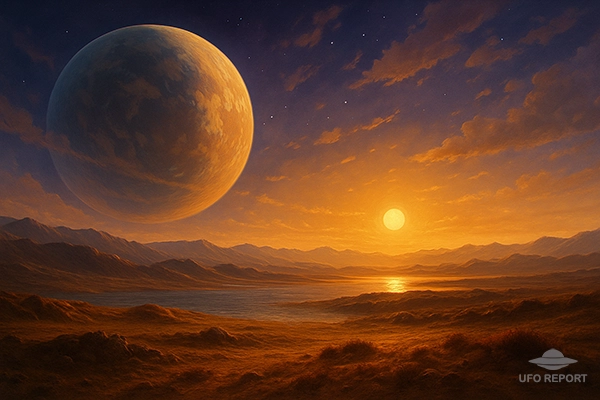
Kepler-62f is one of the most promising long-distance candidates for life. Discovered in 2013, this super-Earth is believed to be:
- 1.4 times the size of Earth
- Located firmly in the habitable zone of its star
- Potentially covered by deep global oceans
A True Earth-Like Exoplanet
Simulations suggest Kepler-62f may have:
- A thick, stable atmosphere
- A global hydrosphere
- Moderate temperatures despite its dimmer star
Its potential Earth-like conditions make it one of the most frequently modeled planets in astrobiological research.
While it is far beyond the reach of current spacecraft, telescope-based atmospheric analysis may one day reveal:
- Water vapor
- Carbon dioxide
- Methane
- Biosignature gases
Kepler-62f may be one of the best long-term targets in humanity’s quest to find life.
👉 Read more: [Kepler-62f: The Potentially Habitable Exoplanet 1,200 Light-Years Away from Earth]
A Universe Full of Possibilities
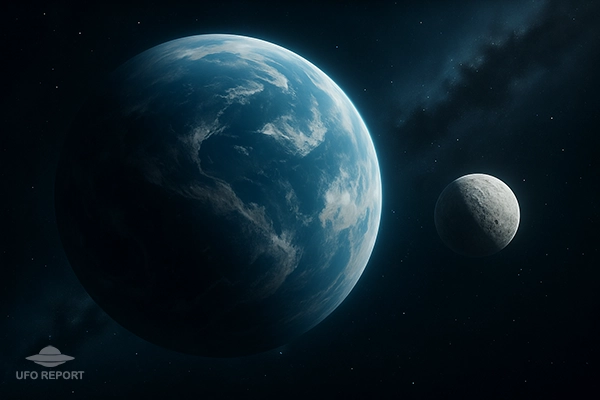
Humanity now stands at the edge of the greatest discovery in history — the realization that life may not be unique to Earth. The worlds most likely to harbor life are no longer limited to planets with blue skies and warm oceans. Instead, the search includes:
- Icy moons with hidden seas
- Desert planets with ancient rivers
- Distant exoplanets shrouded in clouds
Each of the five worlds in this list — Europa, Enceladus, Mars, Proxima b, and Kepler-62f — offers a different piece of the puzzle. Some may host microbes. Others could harbor complex ecosystems. And some may simply remind us how fragile and rare life truly is.
The universe is vast, ancient, and full of environments that defy imagination. Whether life is common or vanishingly rare, our search continues — driven by curiosity, by science, and by the oldest question humanity has ever asked:
Are we alone?