

It was just after sunset on November 5, 1975, when seven loggers driving home through Arizona’s Apache-Sitgreaves National Forest saw something that would change their lives — and the world’s understanding of the UFO phenomenon — forever.
For five days, one of them — Travis Walton, a 22-year-old forestry worker — was missing without a trace. His coworkers claimed he had been struck by a beam of light from a hovering disc and taken into the sky. When Walton returned, dazed and dehydrated, his story was beyond belief — a detailed account of an alien abduction that would become one of the most investigated, controversial, and enduring cases in UFO history.
Nearly fifty years later, the Travis Walton abduction remains a touchstone in the study of close encounters — a mystery balanced between evidence, skepticism, and the limits of human understanding.
The Encounter in the Pines
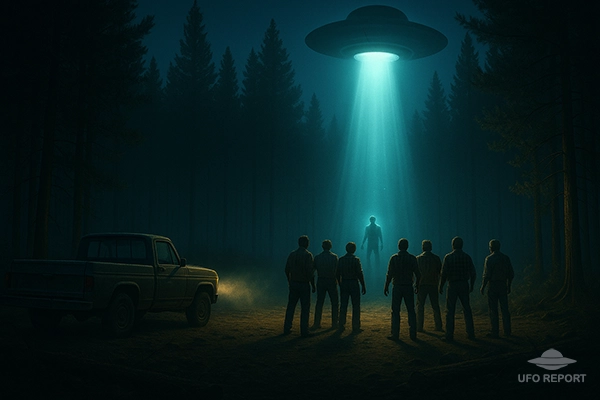
The logging crew, contracted by the U.S. Forest Service, had spent the day thinning trees near the small town of Snowflake, Arizona. As dusk fell, they packed into a pickup truck and began the long drive down the mountain road. The forest was still — until a sudden flash of light broke through the trees ahead.
At first, the men thought it was a forest fire. But as they drew closer, they saw a glowing disc-shaped craft hovering about 20 feet above the clearing. It emitted a high-pitched hum and rotated slowly, casting moving shadows across the pines.
Walton, sitting in the passenger seat, stepped out before anyone could stop him. “I was transfixed,” he later recalled. “It was beautiful — otherworldly.”
As he walked toward the craft, a beam of blue-green light shot out and struck him squarely in the chest. His body lifted off the ground, frozen midair, before crumpling to the forest floor.
Panicked, the other six men fled. When they returned minutes later, both Walton and the object were gone.
The Search and the Suspicion
The crew raced back to town and reported the incident to local authorities. Skepticism was immediate. To the sheriff’s deputies, it sounded like a cover story for something far more sinister — perhaps an argument gone wrong, or worse.
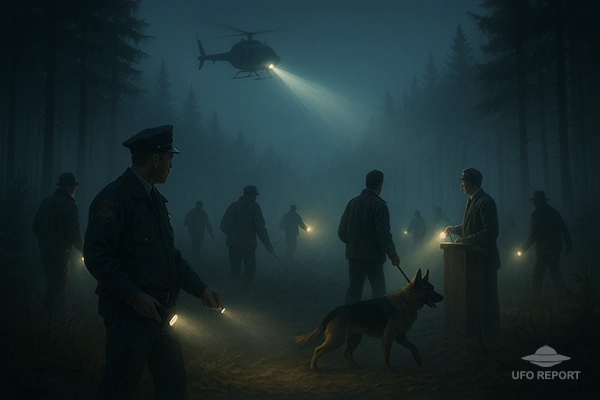
That night, a massive manhunt began. Police, volunteers, and forest rangers combed the woods, joined by helicopters, search dogs, and eventually the National Guard. But there was no trace — no body, no blood, no burned ground.
Within days, suspicion turned toward the loggers. Investigators pressured them to confess, convinced they were hiding a crime. To clear their names, all six agreed to take polygraph tests administered by the Arizona Department of Public Safety. Five passed; one was inconclusive due to emotional distress — but none showed deception.
It was one of the first times in UFO history that multiple witnesses under police scrutiny held to a consistent, verifiable story.
The Missing Five Days
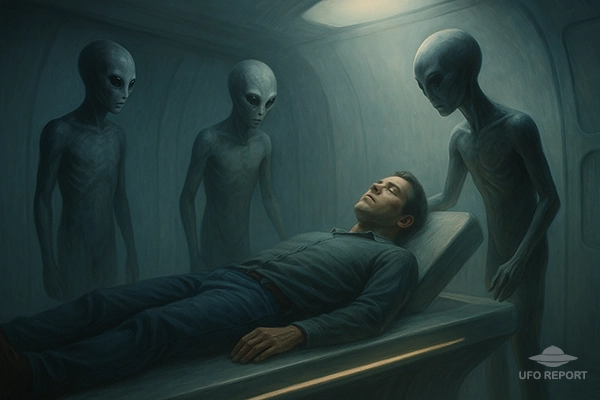
On November 10, nearly a week after his disappearance, Walton reappeared at a gas station in the nearby town of Heber. Disoriented and terrified, he thought only a few hours had passed. He told investigators he had woken up on a table in a sterile, metallic room surrounded by small, humanoid beings with pale skin and large black eyes.
Panicking, Walton said he lashed out, pushing one of the beings away before they left the room silently. Moments later, taller, human-like figures in tight-fitting uniforms arrived and guided him through curved hallways to a domed chamber filled with lights and star-like projections.
One of the figures placed a clear helmet over his head. Walton said he lost consciousness — and when he woke again, he was lying on the cold pavement outside Heber, watching a saucer rise silently into the night sky.
His account blended terror and transcendence — a story so vivid that it has become a psychological Rorschach test for believers and skeptics alike.
Aftermath and Public Firestorm
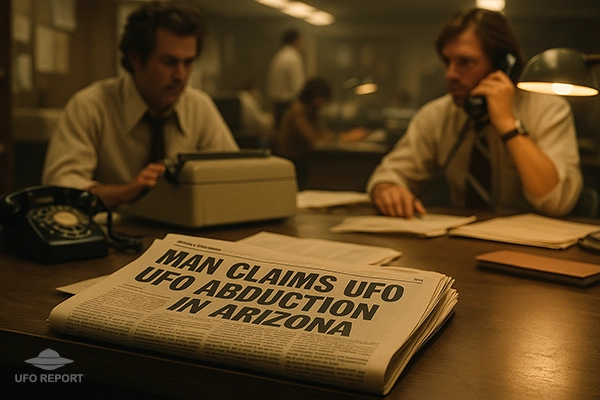
News of the “Arizona UFO abduction” exploded across national headlines. Journalists, investigators, and UFO researchers flooded Snowflake. For the first time since Roswell, the American public was confronted with a case where witnesses, evidence, and missing time seemed to intersect.
Walton’s story was investigated by APRO (Aerial Phenomena Research Organization) and later by NICAP (National Investigations Committee on Aerial Phenomena), both of which found the witnesses credible. Debunkers, including Philip J. Klass, accused the group of fabricating the story for publicity or money — claims that never held up under scrutiny.
In 1978, Walton published his firsthand account, The Walton Experience, expanding on his memories under hypnosis and defending his credibility. Fifteen years later, Hollywood adapted his story into the 1993 film Fire in the Sky, dramatizing the events with unsettling intensity. While the movie exaggerated certain scenes, it reignited global interest in his case.
Decades later, Walton still stands by his story. He has taken multiple polygraphs — the majority of which he passed — and continues to speak publicly at UFO conferences. “I don’t care who believes me,” he often says. “I know what happened.”
Skepticism, Science, and Legacy
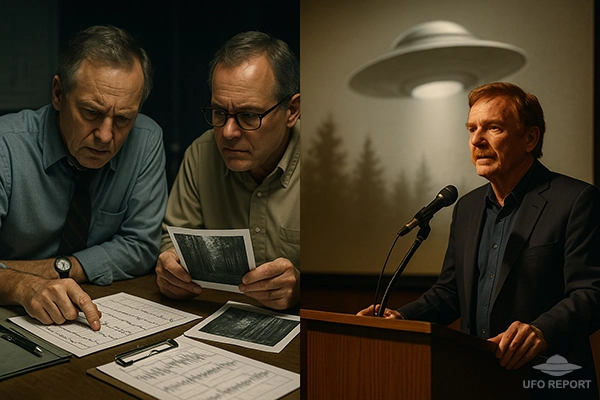
To skeptics, the Walton abduction remains a human story wrapped in myth — a product of cultural hysteria, faulty memory, and small-town rumor. Psychologists suggest sleep paralysis, trauma, or false-memory formation could explain his vivid recollections. Others note that UFO lore was booming in the 1970s, shaped by television and the lingering shadows of Roswell and Watergate.
But to many researchers, the Walton case refuses to collapse under scrutiny. The polygraph results, the corroboration of six witnesses, and the total absence of evidence of foul play make it one of the most resilient abduction cases on record.
Beyond belief or disbelief, the story reflects something universal: our enduring fascination with what lies beyond — and how close encounters challenge the limits of human reality. The incident inspired countless abductee narratives that followed, reshaping both popular culture and ufology.
Nearly half a century later, the forest still stands where it all began — quiet, vast, and indifferent. And somewhere between skepticism and faith, the light in the trees still burns, a symbol of humankind’s oldest question: What if we are not alone?