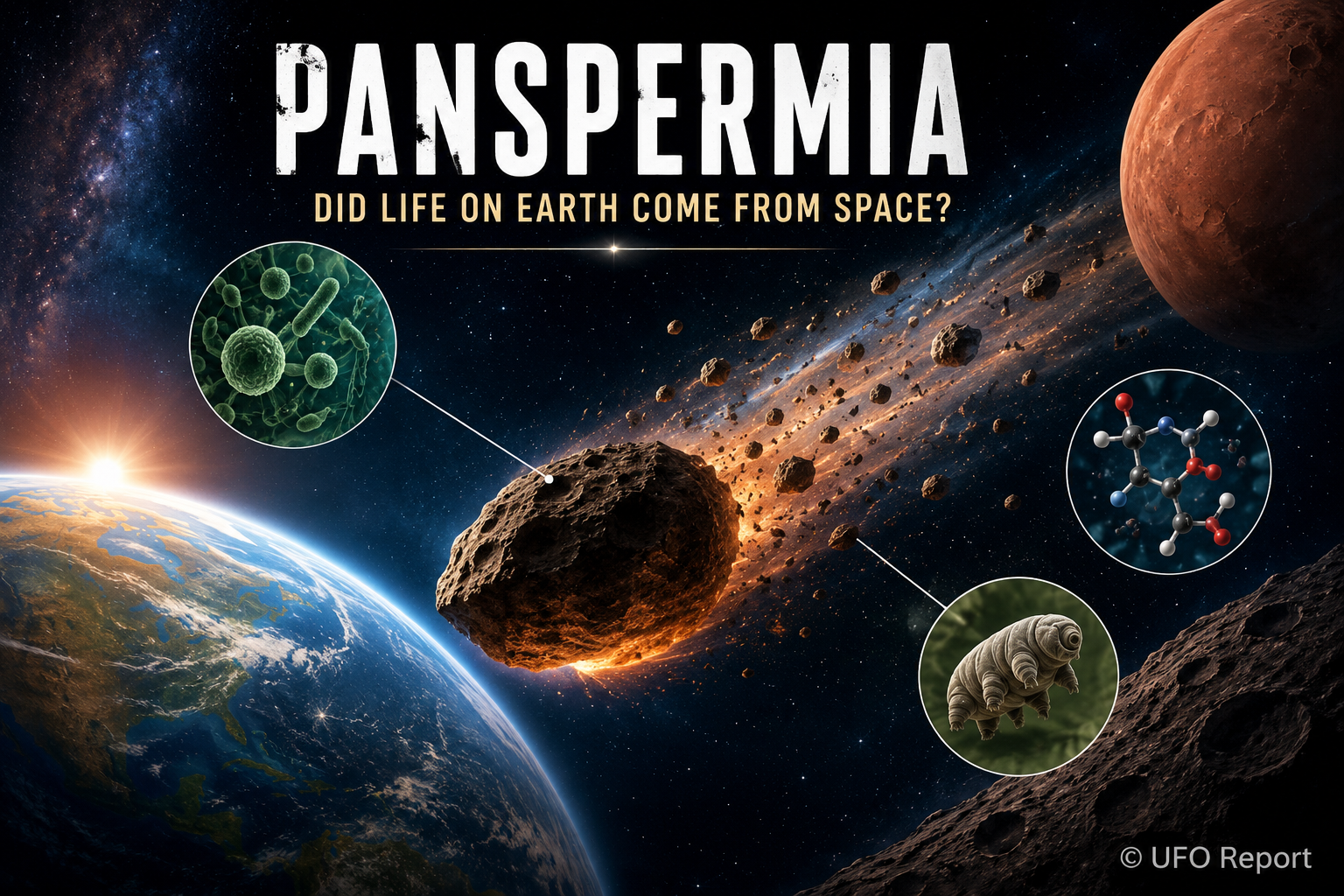
For centuries, humanity has wondered whether life began here on Earth or arrived from somewhere else in the cosmos. While the traditional view holds that life emerged through chemical evolution on our planet billions of years ago, another fascinating possibility continues to gain scientific attention: panspermia. Rather than explaining how life first began, panspermia proposes that the building blocks of life, or perhaps even simple microorganisms, traveled through space before seeding Earth and potentially countless other worlds.
Although the idea sounds like science fiction, researchers have discovered organic molecules throughout the Solar System, found amino acids inside meteorites, and demonstrated that some microorganisms can survive the harsh conditions of space. While no definitive proof exists that life arrived from beyond Earth, the growing body of evidence has transformed panspermia from a fringe concept into a legitimate scientific hypothesis worthy of investigation.
Ancient Origins of a Cosmic Idea
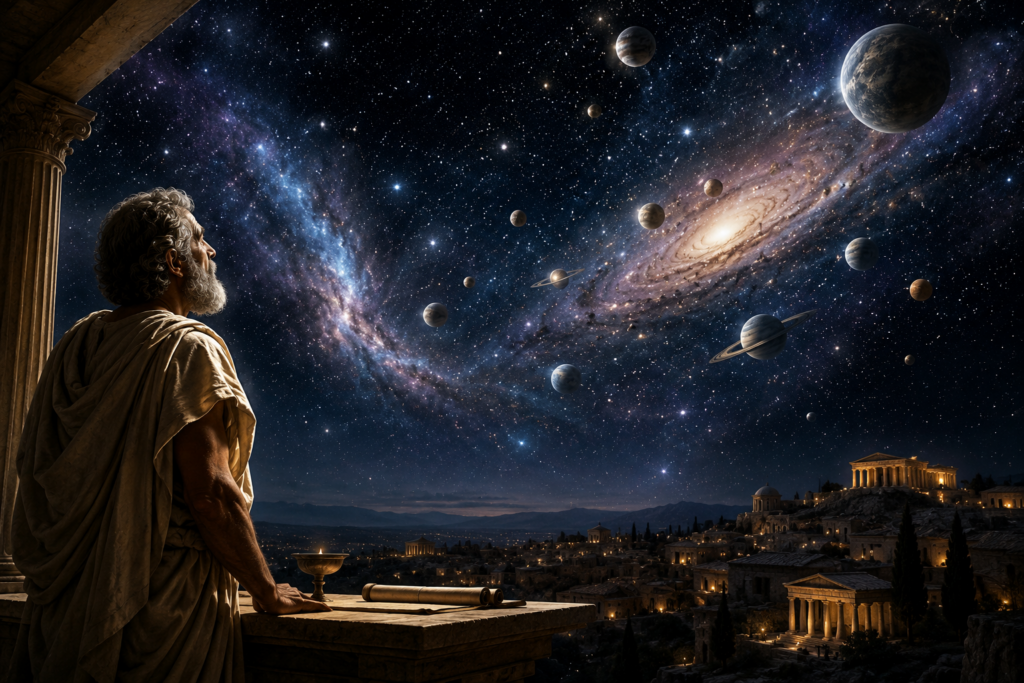
The concept of panspermia is much older than modern astronomy. Ancient Greek philosopher Anaxagoras suggested over 2,400 years ago that the seeds of life were scattered throughout the universe. Centuries later, scientists refined the idea into several distinct theories that attempt to explain how life could spread between planets and even star systems.
One version, known as lithopanspermia, proposes that microorganisms trapped inside rocks blasted from one planet by asteroid impacts could survive long journeys through space before landing on another world. Another theory, radiopanspermia, suggests microscopic life could be carried by radiation pressure across interstellar distances. A more controversial version, directed panspermia, proposes that an advanced civilization intentionally spread life throughout the galaxy.
Regardless of the mechanism, all versions share one central idea: life may not be unique to Earth but instead part of a much larger cosmic ecosystem.
Clues Hidden Inside Meteorites
One of the strongest arguments supporting panspermia comes from meteorites. Scientists have recovered numerous meteorites containing surprisingly complex organic compounds, including amino acids, nucleobases, and other molecules considered essential for life.
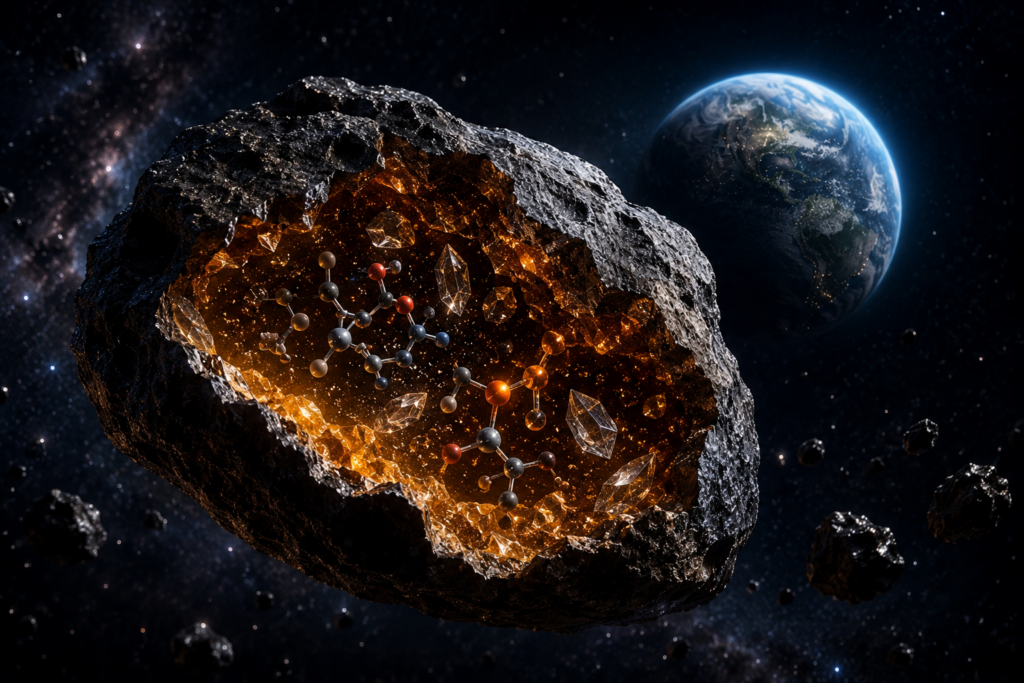
The famous Murchison Meteorite, which fell in Australia in 1969, contained more than 70 amino acids, many of which are rarely found on Earth. Since then, additional meteorites have revealed sugars, hydrocarbons, and carbon-rich compounds that demonstrate chemistry associated with life can occur naturally in space.
These discoveries do not prove extraterrestrial organisms exist, but they do suggest that the ingredients required for biology are widespread throughout the Solar System. If complex organic chemistry occurs inside asteroids and comets, it raises the possibility that young planets receive a constant supply of life’s building blocks during their formation.
Can Life Survive the Journey?
The greatest challenge facing panspermia has always been survival. Space is an unforgiving environment filled with intense radiation, vacuum, freezing temperatures, and long travel times. Surprisingly, numerous experiments have demonstrated that some organisms are far more resilient than scientists once believed.
The bacterium Deinococcus radiodurans can survive radiation doses thousands of times greater than those lethal to humans. Tiny animals called tardigrades, often nicknamed water bears, have survived direct exposure to the vacuum of space, extreme temperatures, and intense ultraviolet radiation during orbital experiments.
Researchers aboard the International Space Station have also exposed bacterial spores to the space environment for years, discovering that some remain viable when shielded inside rock-like materials. These findings support the possibility that microorganisms hidden beneath the surface of meteorites could potentially survive interplanetary travel.
Mars May Have Shared Life With Earth
Among all neighboring worlds, Mars represents perhaps the most realistic candidate for natural panspermia.
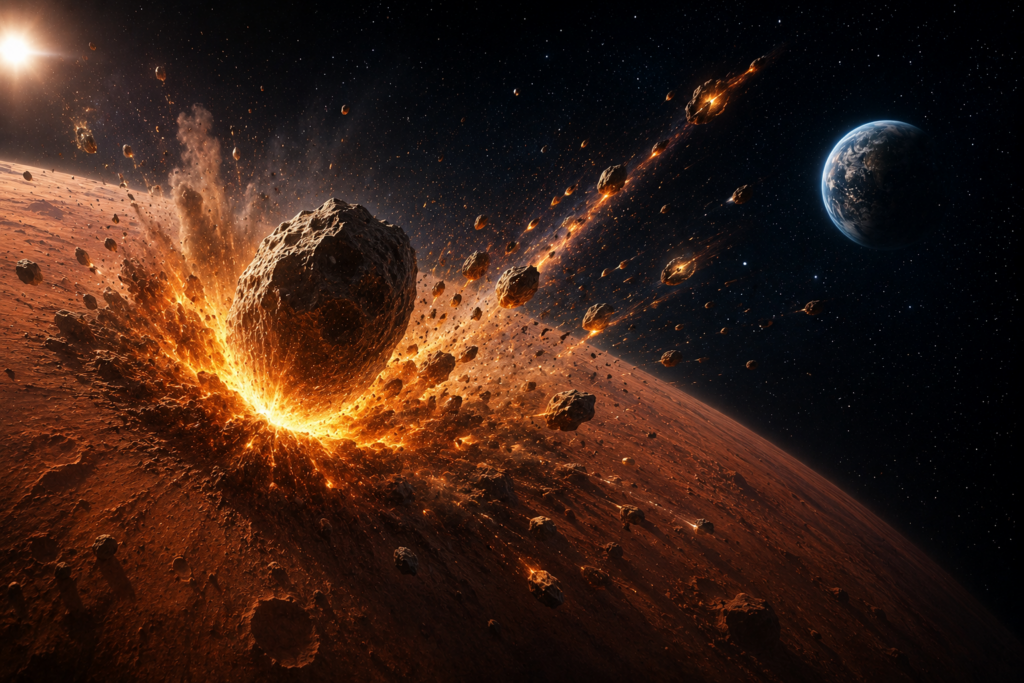
Billions of years ago, Mars possessed rivers, lakes, and possibly even oceans. During that same period, massive asteroid impacts frequently struck both Mars and Earth. Computer simulations indicate that rocks blasted off Mars by these impacts could have reached Earth in relatively short periods of time, sometimes in only a few thousand years.
Scientists have already identified dozens of confirmed Martian meteorites on Earth, proving that rocks naturally travel between the two planets. If microbial life once existed beneath the Martian surface, some researchers argue it could theoretically have been transported to Earth. Likewise, Earth’s earliest microbes might have made the journey in the opposite direction.
Future Mars sample return missions and continued exploration may eventually reveal whether both planets once shared similar biological signatures.
Beyond Our Solar System
If panspermia operates between planets, could it also connect entire star systems?
Interstellar objects such as ʻOumuamua and 2I/Borisov have demonstrated that material naturally moves between stellar systems. Although the distances are enormous, some researchers believe that over billions of years, planetary debris containing organic compounds or dormant microorganisms could slowly migrate across the galaxy.
Recent discoveries have strengthened this possibility. Thousands of exoplanets have now been identified, many located within their stars’ habitable zones. Organic molecules have also been detected inside giant molecular clouds where new stars and planets are born.
If life’s ingredients are already present before planets fully form, biology throughout the Milky Way may share a common chemical ancestry.
What Panspermia Does Not Explain
Despite its appeal, panspermia leaves one fundamental question unanswered.
Even if life arrived on Earth aboard a meteorite, where did it originate in the first place?
The hypothesis shifts the location of life’s origin rather than solving it. Somewhere, on some world or within some ancient cosmic environment, chemistry still had to cross the threshold into biology.
For this reason, many scientists view panspermia as complementary rather than competing with studies of abiogenesis. Both fields seek to understand life’s beginnings, but from different perspectives. One asks where life started, while the other explores how it may spread across the universe.
A Universe Filled With Possibilities
Panspermia challenges one of humanity’s oldest assumptions—that life began in complete isolation on Earth. Instead, it presents a universe where planets exchange material, organic chemistry is common, and perhaps even microscopic life travels naturally between worlds.
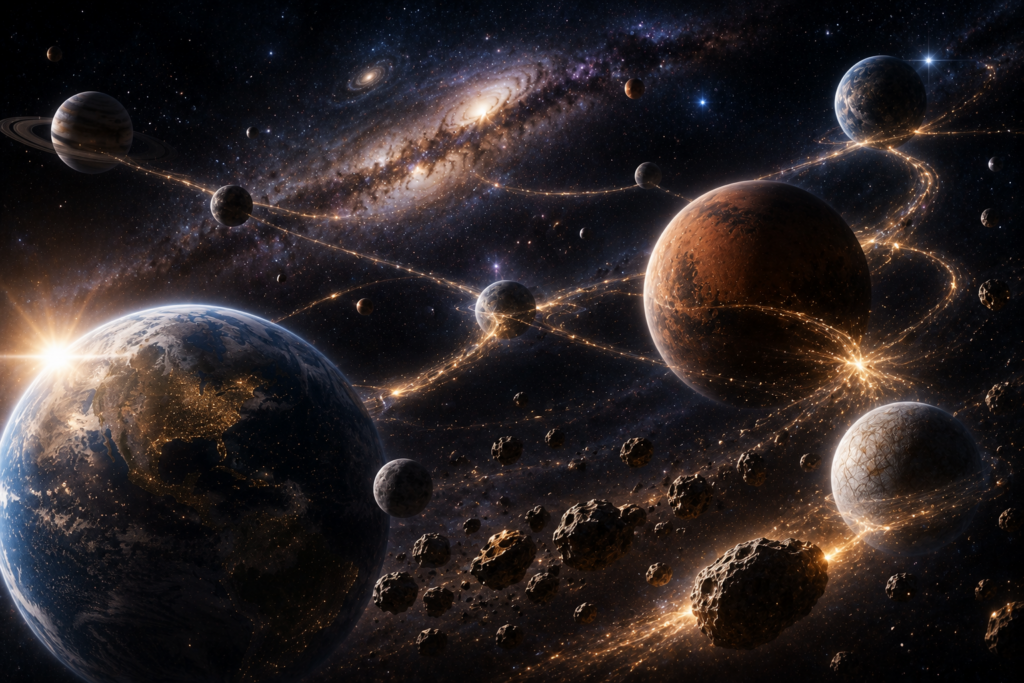
Although no direct evidence has yet confirmed that Earth was seeded from space, every new discovery of organic molecules, resilient microorganisms, habitable exoplanets, and interstellar objects adds another intriguing piece to the puzzle. As future missions return samples from asteroids, Mars, and distant icy moons, scientists may finally determine whether life is a uniquely terrestrial phenomenon or part of a much larger cosmic network.
If panspermia proves correct, humanity’s family tree may extend far beyond Earth, linking every living organism to an ancient journey that began somewhere among the stars.