
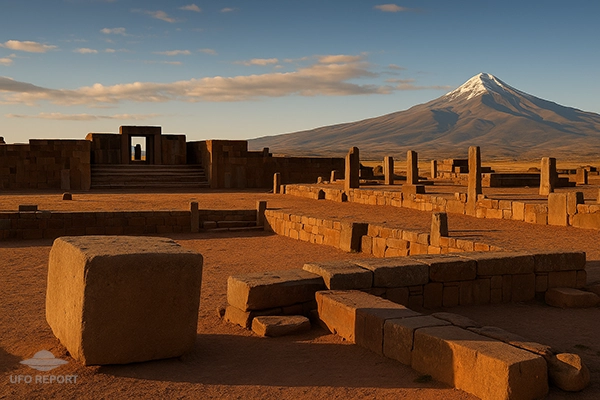
At nearly 13,000 feet above sea level, on the wind-swept plains near Lake Titicaca, lies one of the greatest enigmas of the ancient world — Tiahuanaco, also known as Tiwanaku. The site feels timeless, suspended between sky and earth, its massive stone gateways and monolithic sculptures weathered by centuries of high-altitude sun.
Long before the rise of the Inca, an advanced civilization flourished here — one that left behind architectural precision and astronomical sophistication so extraordinary that it continues to puzzle researchers today.
To modern archaeologists, Tiahuanaco is the capital of a pre-Columbian empire that ruled much of the southern Andes. To mystics and alternative historians, it is a remnant of a lost golden age — perhaps even the “birthplace of civilization” in the Americas. Whatever the truth, the ruins of Tiahuanaco embody a unique intersection of myth, mathematics, and megaliths, a place where stone and starlight met in devotion.
City of the Sky and Stone
The heart of Tiahuanaco sits on a vast plateau just 15 kilometers from Lake Titicaca. Its location was no accident. The builders chose a place where the horizon aligns perfectly with the solstices, allowing the rising and setting sun to frame the temples at precise moments of the year.
The Kalasasaya Temple, with its towering stone pillars, is an open-air observatory — an architectural calendar that once marked the seasons for planting and ceremony. On the June solstice, the first rays of dawn shine directly through its eastern gate, illuminating the inner courtyard in a golden line.
Archaeologists believe Tiahuanaco may have been founded as early as 300 B.C., reaching its peak between 600 A.D. and 1000 A.D. Yet early explorers such as Arthur Posnansky argued it was far older — perhaps 10,000 years — citing astronomical alignments that, if accurate, would place its construction before the dawn of recorded civilization. Though mainstream science disputes those dates, the precision remains undeniable.
The city itself sprawled across several square kilometers, housing perhaps 20,000 inhabitants and serving as the spiritual and political capital of the Tiwanaku state. Surrounding settlements and farmlands connected to it through a vast network of raised fields and irrigation channels, evidence of a highly organized and sustainable agricultural system that thrived in one of Earth’s harshest environments.
The Architecture of the Sacred
At the center of Tiahuanaco rises the Akapana Pyramid, a stepped, terraced structure roughly 50 feet high and shaped like a half-cross. It was once faced with finely cut andesite blocks and filled with intricate drainage channels — a symbolic mountain meant to mirror the Andes and act as a sacred link between the human world and the gods above. Archaeological findings suggest the pyramid was used for rituals dedicated to the sun, rain, and fertility, with offerings of gold, ceramics, and llama bones found near its summit.
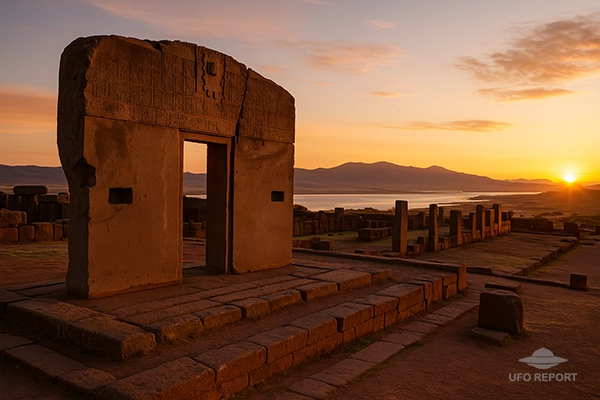
Nearby stands the Kalasasaya Temple, an immense rectangular enclosure measuring more than 400 feet across, surrounded by monolithic pillars. Within its walls stands one of the site’s most iconic relics: the Gateway of the Sun. Carved from a single 10-ton block of andesite, it depicts a radiant deity — often identified as Viracocha, the Andean creator god — surrounded by winged figures and symbols that may represent a solar calendar.
When sunlight strikes the gateway at dawn, the carvings seem to come alive, embodying the Tiwanaku’s union of religion and astronomy.
These monuments are not simply architectural — they are spiritual texts in stone. Every line, cut, and alignment carries meaning. The precision with which the blocks were joined, without mortar and with seams so tight that a blade cannot fit between them, suggests both advanced planning and deep reverence for the act of building itself. In Tiwanaku culture, architecture was prayer, geometry was theology, and the cosmos was the blueprint.
Myths passed down through the Andes tell that Viracocha emerged from Lake Titicaca to create the world, the sun, and humanity. Tiahuanaco, overlooking that same sacred lake, was said to be the site of this first dawn — the birthplace of the sun and, perhaps, of civilization itself.
Puma Punku and the Enigma of Precision
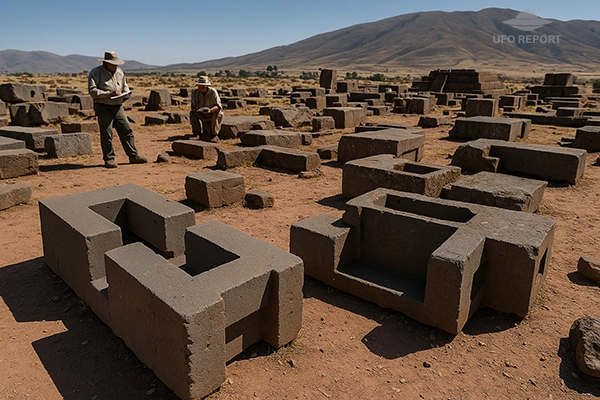
A short distance from the main complex lies Puma Punku, a place that defies easy explanation. Scattered across the plateau are colossal andesite blocks weighing up to 130 tons, cut into intricate interlocking shapes — some resembling modern machine components. Their edges are laser-sharp, their surfaces perfectly flat, and their corners cut at precise 90-degree angles.
Archaeologists have long debated how these stones were quarried, transported, and assembled without metal tools or the wheel. Even today, the engineering accuracy rivals modern tolerance standards.
For some, Puma Punku’s craftsmanship suggests the use of lost technology — hydraulic saws, advanced stone-shaping methods, or even forgotten knowledge passed down from an earlier civilization. Pseudo-archaeological theories go further, proposing connections to extraterrestrial influence, citing the site’s name — “Door of the Puma” — as symbolic of an interdimensional gateway.
Mainstream researchers, however, credit the brilliance of Tiwanaku engineers and artisans. Recent 3D-scanning studies by Bolivian and Japanese teams have confirmed the consistency of measurements and revealed modular construction techniques. Each block was part of a larger geometric plan — not random fragments, but a sophisticated architectural puzzle designed to withstand earthquakes and time.
Puma Punku remains one of the most extraordinary examples of precision stonework in the pre-Columbian world. Whether the result of divine inspiration or advanced indigenous ingenuity, it stands as enduring proof of human capability pushed to its absolute limits.
Legacy of the Sun Builders
Beyond its monumental architecture, the Tiwanaku civilization achieved remarkable advances in agriculture, social organization, and environmental adaptation. Using an ingenious system of raised fields called suka kollus, they transformed the cold, flood-prone highlands into fertile farmland. These elevated platforms absorbed heat during the day and released it at night, protecting crops from frost.
Archaeologists estimate this technique sustained tens of thousands of people and influenced later Andean cultures, including the Inca, who adopted and expanded Tiwanaku engineering principles.
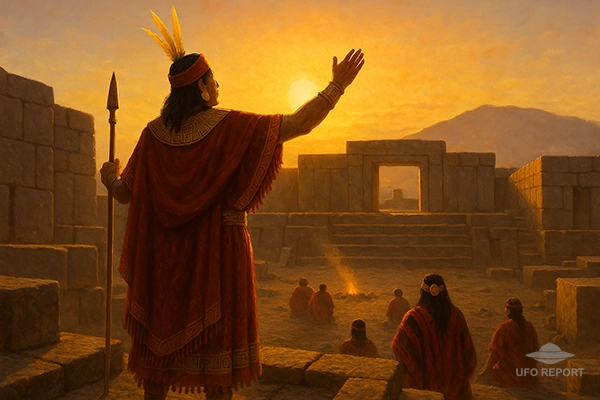
Tiahuanaco was not just a city — it was an idea. Its influence radiated across the Andes through trade, art, and religion. Pottery, textiles, and iconography found hundreds of miles away bear the hallmarks of Tiwanaku design: stepped motifs, sunburst symbols, and depictions of the staff-bearing deity that would later appear in Incan art as Inti or Viracocha.
Yet around 1000 A.D., the empire suddenly declined. Theories range from prolonged droughts to internal strife and the collapse of its agricultural systems. Whatever the cause, the people of Tiwanaku eventually dispersed, their temples fell silent, and the stones of their sacred city were left to the wind.
Centuries later, the Inca revered the ruins as the work of gods, naming them “the city of the dawn” and incorporating their mythology into their own creation story.
Eternal Echoes of the Andes
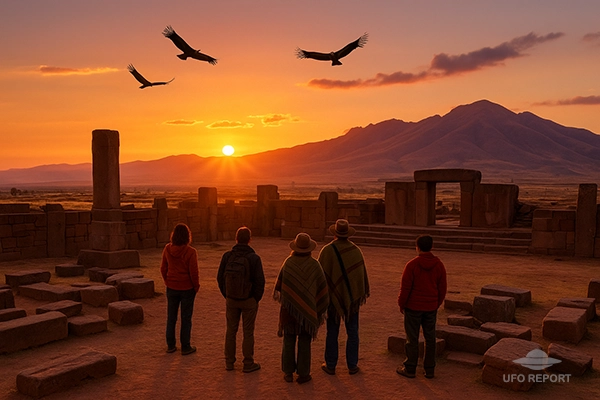
Today, Tiahuanaco endures as both an archaeological treasure and a spiritual symbol. Visitors walk among its vast courtyards and toppled monoliths, feeling the same awe that explorers felt centuries ago. At sunrise, when the light passes through the Gateway of the Sun and paints the Akapana Pyramid in gold, it is easy to believe the old legends — that this was once the cradle of the gods.
Modern archaeologists continue to uncover its secrets using satellite mapping, ground-penetrating radar, and 3D reconstructions. Beneath the surface, they’ve discovered buried walls, ritual offerings, and evidence of ceremonial paths extending toward Lake Titicaca. Each discovery deepens the mystery rather than resolving it.
To stand at Tiahuanaco is to confront a paradox: a civilization advanced enough to move mountains, yet humble enough to align its life to the rhythms of the cosmos. The stones whisper of forgotten knowledge — of people who believed that by mastering the order of the heavens, they could bring harmony to the earth.
And perhaps they did.
For as the sun rises each day over the Andean altiplano, the shadows of Tiahuanaco still stretch across the centuries — eternal echoes of the builders who touched the sky.