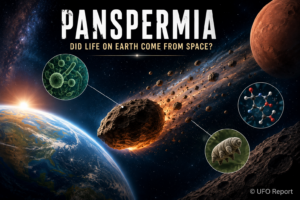

The search for habitable worlds has taken humanity far beyond the borders of our solar system. Each discovery pushes us deeper into the cosmos, reshaping our understanding of how many Earth-like planets might exist and how many opportunities there may be for life to emerge elsewhere. Among the thousands of exoplanets found in the past decade, only a select few stand out as truly remarkable. Kepler-62f is one of them. Hidden in the distant constellation Lyra, orbiting a calm and ancient star, this distant world has become a symbol of both scientific curiosity and the enduring question of whether we are alone.
Kepler-62f is compelling not because we know much about it, but because of what we might learn. It represents a category of worlds that seem oddly familiar, yet remain far beyond our current reach. It is a planet that sits in the narrow comfort zone around its star, where temperatures could allow liquid water to exist. It is large enough to hold onto a stable atmosphere, small enough to be rocky, and old enough to have undergone billions of years of evolution. All of these traits place Kepler-62f at the center of both scientific study and philosophical wonder. This article explores what we know about this distant super-Earth, what it might be like, and why it remains one of the strongest candidates in the search for life beyond Earth.
The Kepler-62 System: An Older, Calmer Sun
Kepler-62 is a K-type star, smaller and cooler than our Sun. Stars like this have gained significant attention in recent years because they tend to be more stable than younger, hotter stars. Their long lifespans create a gentle environment that can last tens of billions of years. This extended stability provides ample time for planets to form oceans, atmospheres, and possibly even life.
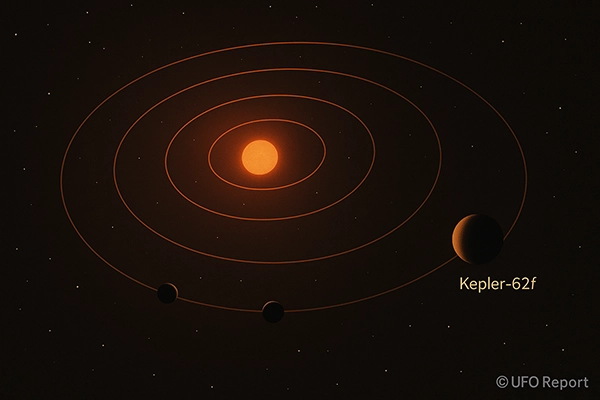
The Kepler-62 system contains at least five planets, each orbiting in near-perfect harmony. Of these worlds, Kepler-62f orbits the farthest from its star and receives less heat than Earth does from the Sun. Yet because the star is cooler and dimmer, the planet’s position falls squarely within the habitable zone. The system itself is estimated to be older than our solar system, perhaps around seven billion years old. This immense age raises tantalizing questions about what evolutionary paths may have unfolded on its planets.
From a distance, Kepler-62 appears as a faint point of light. But telescopic data transformed that dot into a planetary family, one that is quiet, balanced, and potentially filled with opportunity. In many ways, the system resembles what our solar system might look like if seen from hundreds of light-years away: small rocky planets close to their star, larger planets farther out, and a habitable zone that sits like a delicate ring around the center.
What We Know About Kepler-62f
Kepler-62f is classified as a super-Earth. With a radius about 1.41 times that of Earth, it is larger but not so massive that it would become a gas planet. Most models suggest it is rocky, potentially with deep oceans or a thick atmosphere. Its mass is not precisely known, but the size indicates it could have a strong gravitational grip on its gases, helping it sustain an atmosphere for billions of years.
The planet completes one orbit every 267 days. This puts its year close to Earth’s in length, although the climate could be very different. Kepler-62f receives less stellar energy than Earth, which means that without a sufficiently thick atmosphere, the planet would be cold and frozen. However, a slightly denser atmosphere rich in carbon dioxide or other greenhouse gases could retain enough heat to maintain liquid water on the surface.
The Kepler space telescope detected the planet using the transit method, watching for small dips in starlight as the planet crossed in front of its star. From these dips, astronomers derived its size, orbit, and position in the habitable zone. Beyond that, Kepler-62f remains shrouded in mystery. No current telescope can measure its atmosphere or surface conditions directly. But computer simulations, based on everything we know, have offered intriguing possibilities about what the world might look like.
A Planet in the Goldilocks Zone
The most important aspect of Kepler-62f is its position within the habitable zone. This region around a star marks the delicate threshold where temperatures allow water to remain in liquid form. If a planet is too close, its oceans evaporate and its surface becomes hostile. If it is too far, water freezes into permanent ice. Kepler-62f orbits in a region that appears to be just right.
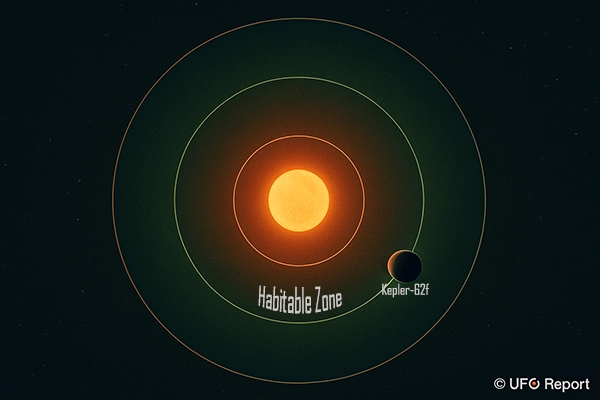
However, location alone is not enough. Habitability depends on many variables, including atmosphere, geology, and magnetic fields. A planet could sit in the perfect zone but still be dry, barren, or unstable. Kepler-62f’s slightly larger size suggests it could hold onto its atmosphere more effectively than Earth, which supports the idea that it might maintain a stable climate.
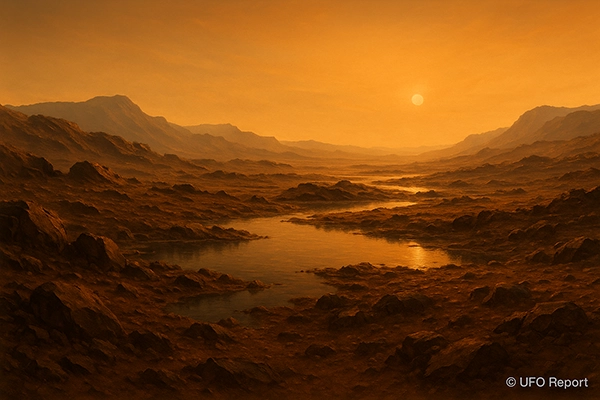
Simulations show that if Kepler-62f has an atmosphere even three times thicker than Earth’s, it could sustain mild temperatures and widespread oceans. A thicker carbon dioxide atmosphere would trap heat efficiently, making the surface warm enough for lakes or even global seas. The planet might appear blue from space, with swirling clouds and deep water stretching across its surface.
Alternatively, if its atmosphere is thin, the planet could be a frozen world, with vast ice sheets covering the surface. Even in that scenario, areas near the equator could experience seasonal melting, creating temporary liquid water. These possibilities make Kepler-62f a prime target for science, because even cold worlds can occasionally sustain the right ingredients for life.
The Unknown Atmosphere: A Window Into Habitability
The atmosphere of Kepler-62f remains one of the biggest unanswered questions. It is the deciding factor that determines whether the planet is warm, cold, calm, stormy, or even suitable for life. Since the planet is too distant to analyze directly with today’s instruments, scientists rely on climate models to simulate what its skies might contain.
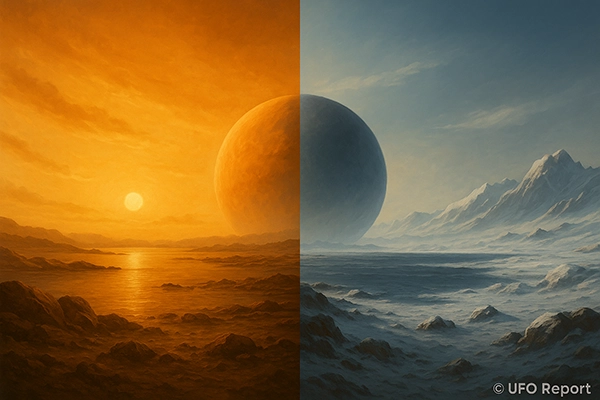
If Kepler-62f has a dense atmosphere, it could resemble a deep ocean world similar to early Earth. A thick layer of carbon dioxide or nitrogen could trap enough heat to support liquid water even at its distance from the star. Winds would sweep across the surface in broad patterns, and weather systems could bring rain to a world that might otherwise freeze.
If the atmosphere is thin, the planet becomes more like Mars. Cold, dry, and prone to wide temperature swings. Yet even this scenario does not eliminate habitability entirely. Subsurface pockets of water could exist, warmed by geothermal heat. Life, if present, might thrive in protected environments beneath the ice.
Scientists also consider the possibility of a hydrogen-rich atmosphere. Hydrogen is an excellent greenhouse gas when present in large amounts. A hydrogen envelope could keep the planet warm enough to support liquid water at much greater distances than Earth’s typical habitable zone. This scenario widens the range of climates Kepler-62f might experience.
Magnetic Fields and Planetary Protection
Life needs protection from harmful solar radiation. On Earth, our magnetic field shields the surface by deflecting charged particles from the Sun. Without such protection, atmospheres erode, water evaporates, and biological molecules break apart.
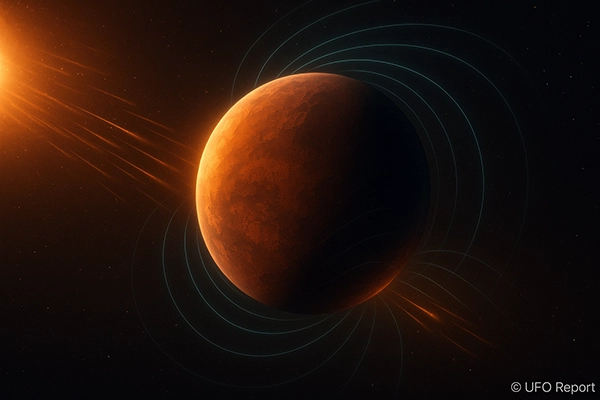
Kepler-62f orbits a calmer star than our Sun, which reduces the intensity of stellar flares. K-type stars are known for their stability, especially later in their lifecycles. This gives Kepler-62f a more favorable environment than planets orbiting volatile red dwarfs. However, whether the planet has its own magnetic field is unknown.
If Kepler-62f has a molten, rotating core, it could generate a magnetic field strong enough to shield its atmosphere for billions of years. This would dramatically increase its chances of habitability. Without it, the atmosphere could be vulnerable. Yet because the star is older and quieter, even a weak field might be enough to preserve conditions suitable for life.
The Challenge of Distance: 1,200 Light-Years Away
Kepler-62f is extraordinarily far from Earth. At 1,200 light-years, even the fastest communication signal we can send would take more than a millennium to arrive. This distance makes direct exploration impossible for the foreseeable future. No conceivable spacecraft could reach it in a human lifetime.
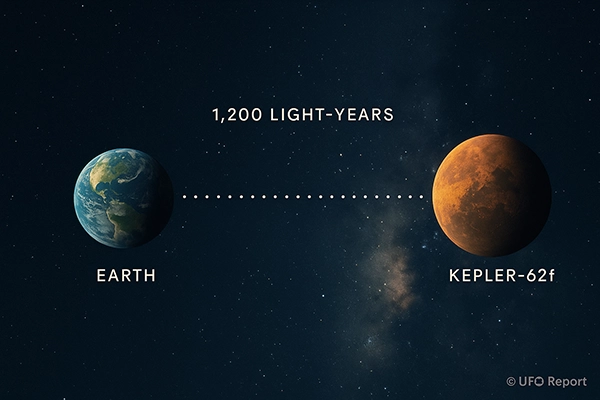
However, the distance does not prevent observation. As telescopes become more advanced, the capability to analyze distant worlds grows dramatically. Future observatories may be able to detect atmospheric signatures, including oxygen, methane, water vapor, or other biosignatures. Even at such extreme distances, the right tools can reveal astonishing detail.
The challenge of distance also makes Kepler-62f symbolic. It represents worlds that might fill the galaxy by the millions. It reminds us that while we cannot reach them now, our understanding of the cosmos is advancing rapidly. As technology grows, so does our ability to study even the most remote planets.
Future Missions and Technological Breakthroughs
Several upcoming missions have the potential to uncover the secrets of Kepler-62f.
The James Webb Space Telescope (JWST) is already capable of probing exoplanet atmospheres for trace gases. Although Kepler-62f is faint and distant, JWST might still glean information about its climate through future techniques and targeted observation campaigns.
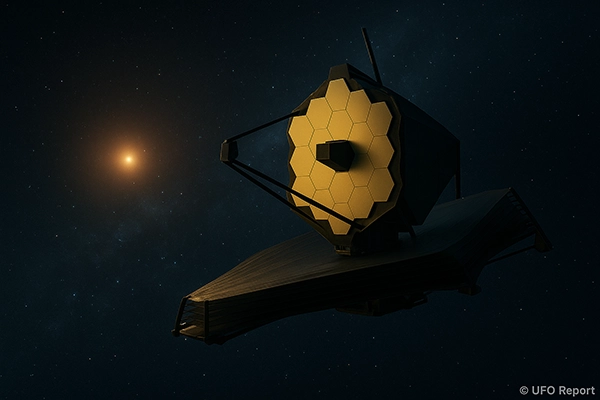
The upcoming Nancy Grace Roman Space Telescope and the European PLATO mission will expand our ability to find Earth-sized planets around other stars and measure their atmospheres. Over time, improved coronagraphs and starshade technology may allow telescopes to directly image distant worlds and separate their light from the overwhelming glow of their stars.
In the longer term, the development of giant ground-based observatories such as the Extremely Large Telescope (ELT) may push exoplanet science into a new era. With massive mirrors and advanced imaging techniques, these instruments could detect atmospheric gases that suggest biological activity, even on planets as far away as Kepler-62f.
Why Kepler-62f Captures Our Imagination
Kepler-62f stands at the crossroads of scientific discovery and human curiosity. It is a world we cannot visit, orbiting a star we cannot see with the naked eye, yet it influences how we think about life in the universe. The planet occupies the perfect blend of the known and the unknown. It is a world shaped by physics we understand, yet cloaked in mysteries we are only beginning to explore.
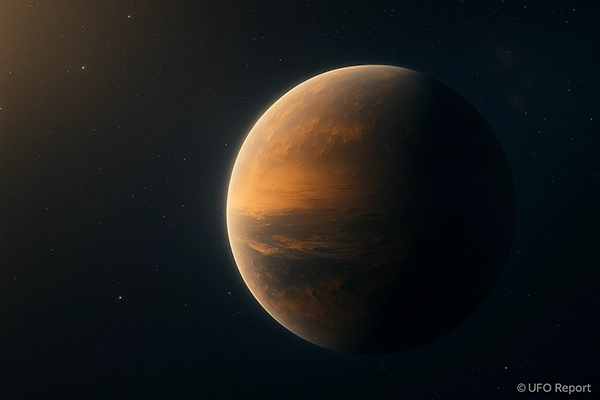
It speaks to our desire to find life elsewhere. It challenges our assumptions about Earth’s uniqueness. And it reminds us that the galaxy is vast, with billions of stars and countless planets we have not yet discovered. Every new world broadens our perspective. Kepler-62f simply stands out because it is one of the first planets to truly feel like a distant cousin to Earth.
A Distant Mirror of What Might Be
Kepler-62f is a world suspended in darkness, orbiting a calm and ancient star. We may never stand on its surface, but its existence shapes the way we think about life beyond Earth. It reminds us that the universe is teeming with worlds, each following its own path, each carrying the potential for environments that might harbor life.
The discovery of Kepler-62f, and the ongoing study of its possible atmosphere and climate, marks one step in a much larger journey. It is a journey driven by curiosity, strengthened by science, and fueled by the hope that one day we will understand our place in the cosmos more clearly.
As we continue to develop new tools to explore the universe, Kepler-62f stands as a symbol of what might be waiting for us. A quiet world, far away, filled with questions that inspire us to keep moving forward. A reminder that somewhere among the stars, the ingredients for life may not be unique to Earth at all.
Kepler-62f: Quick Stats
Exoplanet Type: Super-Earth
Distance from Earth: ~1,200 light-years
Star Type: K-type main-sequence star (Kepler-62)
Orbital Period: 267 Earth days
Radius: 1.41 × Earth
Estimated Mass: Unknown, likely 2–3 × Earth (model-based)
Gravity: Potentially stronger than Earth’s, depending on mass
Location in System: Outer planet among 5 known planets
Habitable Zone: Yes, positioned well inside the star’s Goldilocks Zone
Temperature Potential: Depends entirely on atmosphere; could support liquid water with sufficient greenhouse warming
Atmosphere: Unknown; climate models allow many viable compositions
Surface Conditions: Could be ocean-covered, icy, or rocky depending on atmosphere
Magnetic Field: Unknown
Key Discovery Method: Transit detection via NASA’s Kepler Telescope (2013)
Potential for Life: Moderate to strong in models with thick or CO₂-rich atmospheres
Notable Features: Long orbital period, stable host star, strong candidate for habitability studies
Primary Research Goals: Atmospheric detection, climate modeling, biosignature analysis with future telescopes
👉 Read more: [Searching for Life Beyond Earth: The Top 5 Planets Most Likely to Contain Life]