
For as long as we’ve looked up, the Moon has been both a companion and a riddle—our nearest neighbor, yet forever half-concealed. The side we see from Earth is familiar: its bright scars and dark plains mapped in exquisite detail. But the far side—the so-called “dark side” of the Moon—remained hidden from human eyes until the middle of the last century.
When we finally glimpsed it, what appeared was not revelation but silence: a landscape of endless craters, rugged highlands, and an absence that felt almost deliberate. To many, that emptiness raised more questions than it answered. Could that quiet hemisphere conceal more than geology—perhaps a history, a signal, or a presence we have yet to understand?
The First Glimpse Beyond the Lunar Curtain

Until 1959, no one had ever seen the far side of the Moon. That changed when the Soviet probe Luna 3 sent back the first blurry photographs. What appeared was a rough, heavily cratered landscape with almost none of the smooth, dark plains that we see on the side facing Earth.
But within those low-resolution frames, some observers claimed to see geometric formations—patterns too structured to be natural. Later missions like Zond 3, Apollo 8, and Clementine provided clearer views, yet rumors persisted: rectangular shadows, tower-like objects, and reflective domes supposedly glinting where sunlight grazed the surface.
NASA dismissed these sightings as tricks of light and shadow—classic pareidolia, the brain’s impulse to find familiar shapes where none exist. Still, the fascination stuck. When the side of the Moon forever hidden from Earth first came into view, many felt we were intruding on something that did not want to be seen. As better technology followed, the mystery didn’t fade—it deepened.
Structures in the Shadows

Since the 1970s, a growing archive of lunar photographs—taken by orbiters, telescopes, and Apollo missions—has fueled one of the most enduring debates in modern space history. Scattered among thousands of photos of sterile rock and cratered plains are a handful that seem to hint at geometry amid chaos—forms that look deliberate, aligned, or built rather than eroded.
Supporters of what’s now called the Lunar Base Hypothesis point to several particularly puzzling images:
- A rectangular formation near the crater Paracelsus C, often dubbed “The Lunar Tower,” appears to cast a long, consistent shadow that doesn’t match surrounding topography. Some argue it looks more like a structure rising from the surface than a simple ridge.
- The Shard and The Castle, photographed during Apollo 10 and Apollo 16, are two of the most debated anomalies. The Shard appears as a spire jutting miles into space, while The Castle shows translucent, segmented forms that resemble glass-like architecture—so much so that even NASA technicians reportedly struggled to explain the optical properties.
- In several other images, bright, reflective dome-like glints appear within shadowed craters—especially along the Moon’s far side—seeming to refract or scatter light in ways inconsistent with rock or dust.
Skeptics argue these are optical illusions—the brain’s tendency to impose structure where none exists. They point to the extreme contrast of lunar photography, the harsh lighting angles, and the limitations of early imaging systems that often produced compression artifacts and film scratches mistaken for detail.
Yet to many researchers and enthusiasts, the sheer consistency of these shapes across decades of missions feels difficult to dismiss entirely. Instead, they’ve added fuel. Why, enthusiasts ask, did so many anomalies appear in only a small subset of mission photos? Why were certain negatives reported missing, mislabeled, or—according to some early archivists—“cleaned up” before public release?
The intrigue deepened with whispers of a classified NASA briefing, allegedly shown to senior officials in the early 1970s, containing high-resolution images of what were described as “large-scale artificial structures” on the far side. The presentation, if it ever existed, was said to have been quickly buried under national security protocols. No verifiable copy has ever surfaced—but the story has become one of the foundational myths of lunar mystery lore.
Even decades later, high-definition imagery from modern missions like Lunar Reconnaissance Orbiter and Chang’e 4 continues to be scrutinized for evidence of those same shapes. Some claim to see faint rectilinear patterns buried beneath newer impacts, others note unnatural symmetries that persist despite improved resolution. Whether these forms are artifacts of light and shadow or something truly anomalous, they remind us that even after half a century of exploration, the Moon remains only partly known. But if strange shapes stirred speculation, stranger still were the sounds.
The Whisper of Signals

The far side of the Moon is a unique acoustic void—a place of perfect radio silence shielded from Earth’s electromagnetic noise. Because of this, it’s ideal for astronomy, but it also means that anything transmitting from there would be isolated from detection—unless deliberately sought.
In the late 1960s, several unexplained radio bursts were reported during lunar missions. Some were attributed to equipment interference or cosmic rays, yet others were harder to classify. Apollo 10 astronauts famously described “outer space music”—strange, modulating tones heard while passing behind the Moon. NASA later explained it as cross-channel radio interference, but skeptics argue that the signal’s rhythm and clarity suggested something else—a structured transmission, not random noise.
In more recent years, China’s Chang’e 4 mission, which became the first to land on the far side in 2019, has reignited the conversation. Though no official reports mention artificial signals, amateur radio operators claim to have picked up brief anomalies during the mission’s early communication windows. None have been confirmed—but the idea of a beacon buried beneath the Moon’s far side remains one of modern ufology’s most provocative theories.
The New Era of Exploration

China’s Chang’e 4 lander and its Yutu-2 rover have given humanity its first sustained look at the Moon’s far side—a realm that, until recently, was known only through grainy photographs and speculation. Their instruments have mapped mineral compositions, measured radiation levels, and recorded seismic data that suggest a far more complex lunar history than once assumed. Yet, amid the official reports, a few mission images have drawn attention for other reasons: strangely reflective surfaces, perfectly rounded boulders, and what some observers describe as faint geometric shadows that don’t match the surrounding terrain.
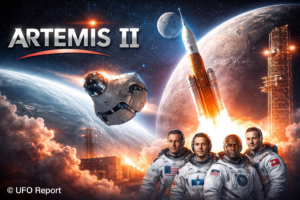
Now, with NASA’s Artemis program preparing to return humans to the Moon and international collaborations expanding lunar exploration, a new era of scrutiny is approaching. Private companies are planning robotic missions, and future bases may target the far side’s radio-quiet zones—regions long speculated about in UFO and anomaly research.
As new eyes and new technologies turn once more toward the hidden hemisphere, we may finally begin to separate illusion from discovery. Whether the answers point to ordinary geology, photographic artifacts, or something that challenges our assumptions entirely, the Moon continues to hold its silence—and our imagination—with equal strength.
The Moon’s Enduring Mystery

Perhaps our fascination with the Moon’s hidden face has never been about proof at all, but about reflection. The far side is a mirror—silent, ancient, and patient—casting back our own curiosity, our need to find meaning in the void.
From whispers of lost civilizations to rumors of silent beacons, the legends endure because they speak to something timeless: the human need to search, to wonder, and to fill the dark with story. Even now, in an age of satellites and sensors, the cosmos still keeps secrets.
Whether the far side hides forgotten ruins, covert experiments, or nothing more than the unbroken beauty of silence, it continues to gaze back with the same unyielding calm—a frontier not of distance, but of imagination.
🌙 Earth’s Moon: Quick Stats
Moon Type: Rocky natural satellite
Distance from Earth: 384,400 km
Orbital Period: 27.3 days
Radius: 1,737 km
Gravity: 16.5% of Earth’s
Average Temperature: –298°F to 224°F (–183°C to 106°C)
Atmosphere: Exosphere; extremely thin
Notable Features: Maria plains, highlands, craters, lava tubes
Water Evidence: Ice in polar shadowed regions
Potential for Life: None, but ideal for human bases