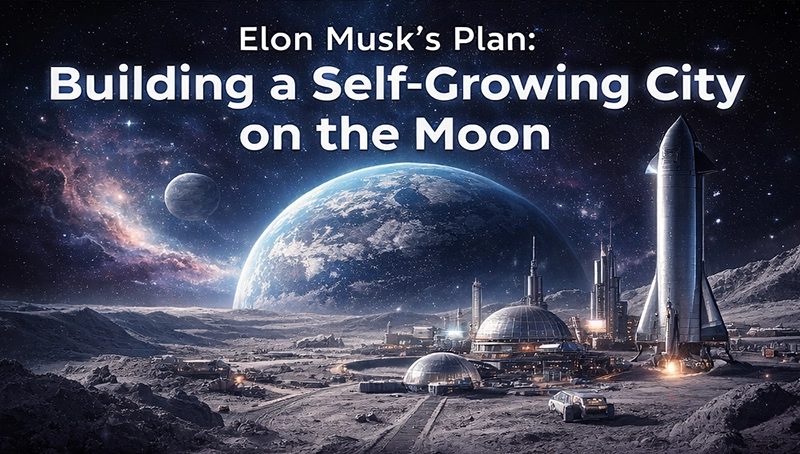
In a bold shift from his long-standing focus on Mars, Elon Musk has unveiled a new vision that sounds like something out of science fiction: a “self-growing city” on the Moon. This concept, driven by his company SpaceX, represents one of the most ambitious ideas in modern space exploration, aiming to create a sustainable, expanding human and industrial presence beyond Earth.
Unlike traditional space bases that rely heavily on constant resupply from Earth, Musk’s idea centers on a city that can grow, adapt, and eventually sustain itself using local resources and advanced automation. If successful, it could mark the first true step toward making humanity a multi-planetary species.
Why the Moon Instead of Mars?
For years, Musk has been synonymous with plans to colonize Mars. However, recent developments have led to a strategic pivot. The Moon offers several key advantages that make it a more practical starting point.
Travel to the Moon is significantly faster and more frequent. Missions can launch roughly every 10 days and take only about two days to arrive, compared to Mars missions, which are limited to once every 26 months and take around six months to reach their destination. This shorter cycle allows SpaceX to test, refine, and scale technologies much more rapidly.
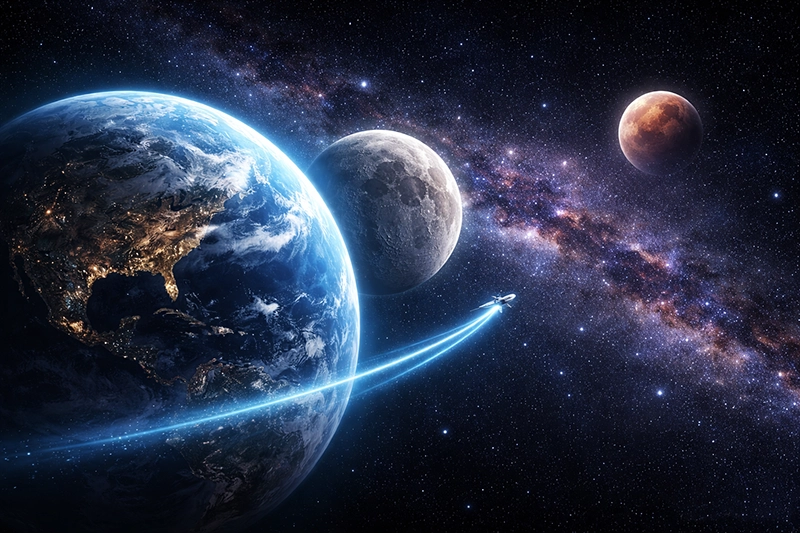
Musk has emphasized that speed is critical. Building a functioning off-world settlement sooner rather than later could help safeguard humanity against potential global catastrophes. In his view, the Moon is simply the fastest path to achieving that goal.
What Does “Self-Growing City” Mean?
The phrase “self-growing city” is central to Musk’s vision. It does not just refer to a settlement that expands over time, it implies a system that becomes increasingly independent from Earth.
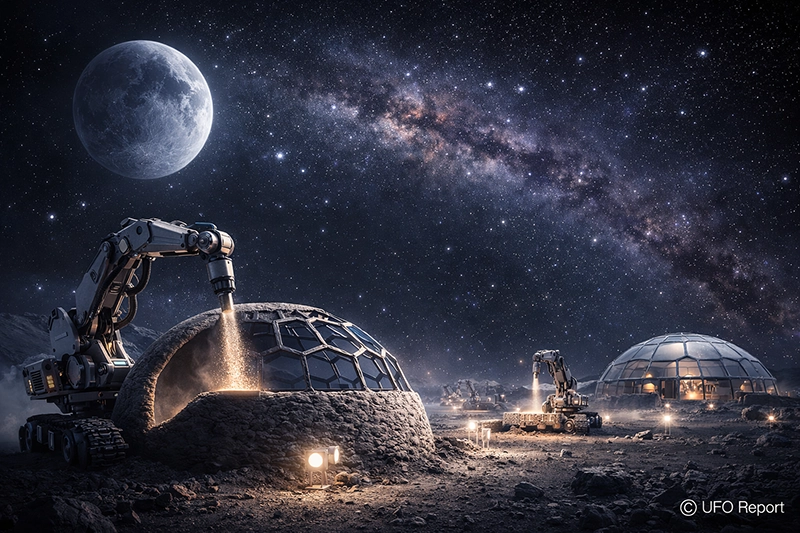
The idea involves several key components:
1. Autonomous Construction
Robots and AI systems would likely play a major role in building infrastructure. Instead of sending large human crews initially, machines could construct habitats, landing pads, and industrial facilities before people arrive.
2. Local Resource Utilization
The Moon is rich in materials such as regolith, which can be used to build structures, and oxygen that can be extracted for life support and fuel. Using these resources reduces the need to transport everything from Earth, dramatically lowering costs.
3. Continuous Expansion
Because missions to the Moon can happen frequently, each new delivery of equipment, materials, or technology can build upon what already exists. Over time, the base could evolve into a full-scale city.
4. Energy Independence
Solar power is abundant on the Moon, especially in regions that receive near-constant sunlight. Musk has also hinted at large-scale energy systems that could support industrial operations and even space-based computing.
The Role of Starship
At the center of this plan is SpaceX’s massive reusable rocket, Starship. Designed to carry large amounts of cargo and people, Starship is intended to make frequent trips between Earth and the Moon.
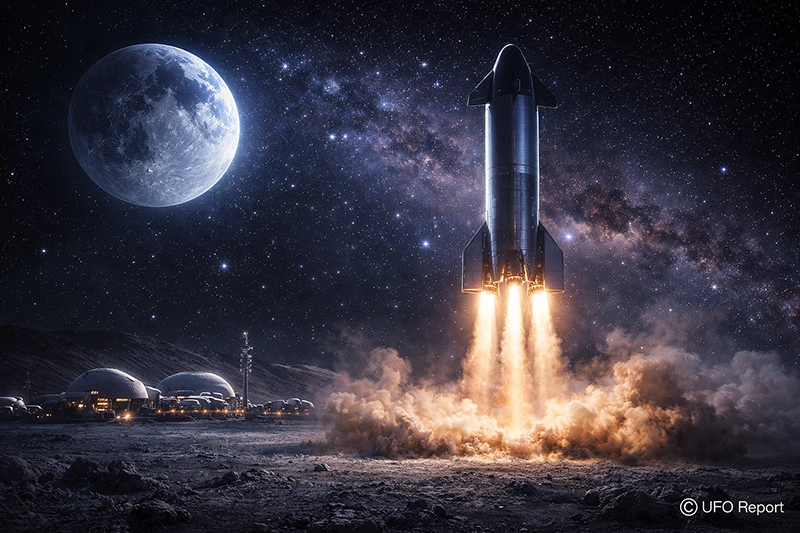
Its ability to deliver heavy payloads is critical. Musk has suggested that large-scale lunar construction will require transporting massive amounts of equipment, something only a vehicle like Starship can realistically handle.
Frequent launches and reusability are key to making the project economically viable. Without drastically reducing the cost of space travel, building any kind of city off Earth would remain out of reach.
A Hub for Industry and Technology
Musk’s lunar city is not just about human survival, it is also about industry. One of the most intriguing aspects of the plan is the idea of manufacturing in space.
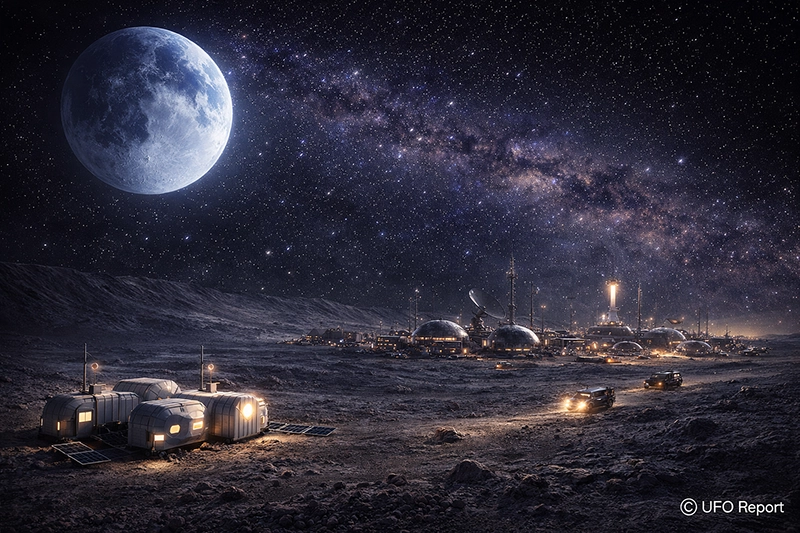
The Moon’s low gravity makes it easier to launch materials into orbit. Musk has discussed the possibility of building factories that produce satellites or other technologies directly on the Moon, then sending them into space more efficiently than launching from Earth.
There are also hints that artificial intelligence could play a major role. With SpaceX’s growing involvement in AI, including its connection to xAI, the Moon could eventually host data centers or computing infrastructure powered by solar energy.
Timeline and Feasibility
Musk has suggested that a basic version of a lunar city could be achieved within a decade. While that timeline is ambitious, it reflects the rapid pace of development SpaceX is aiming for.
However, significant challenges remain. These include:
- Developing reliable life-support systems
- Protecting inhabitants from radiation and extreme temperatures
- Perfecting in-space refueling for Starship
- Establishing sustainable supply chains
Additionally, SpaceX is not working alone. The company is already part of NASA’s Artemis program, which aims to return humans to the Moon and establish a long-term presence. Collaboration between government agencies and private companies will likely be essential to making a lunar city a reality.
Why This Matters for Humanity
At its core, Musk’s plan is about more than just exploration. It is about survival and expansion. By creating a self-sustaining city beyond Earth, humanity would no longer be confined to a single planet.
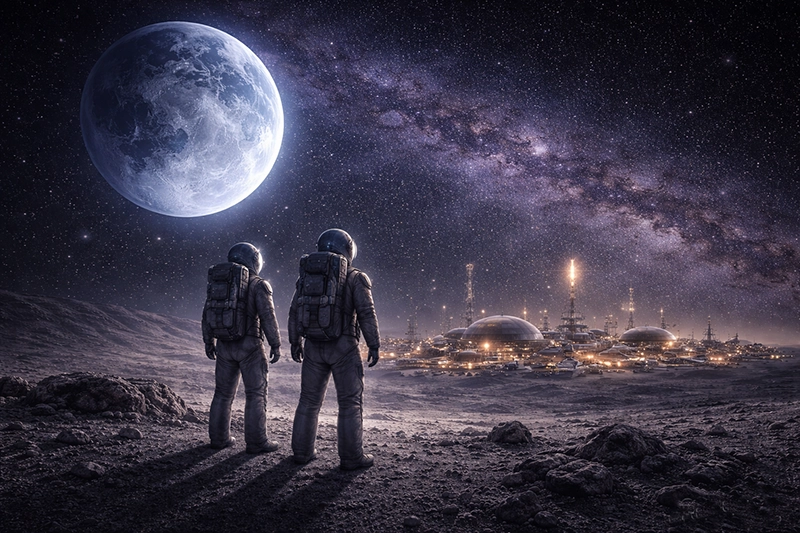
The Moon could serve as a testing ground for future colonies on Mars and beyond. Technologies developed there, such as resource extraction, habitat construction, and closed-loop life support, would be critical for deeper space missions.
It also represents a shift in how we think about space. Instead of short-term missions and temporary bases, the goal is now permanent, growing civilizations beyond Earth.
A New Chapter in Space Exploration
Elon Musk’s vision of a self-growing city on the Moon is both ambitious and controversial. It challenges current technological limits and raises questions about feasibility, cost, and long-term sustainability.
Yet, like many of Musk’s ideas, it pushes the boundaries of what seems possible. If even part of this vision becomes reality, it could mark the beginning of a new era, one where humanity is no longer Earth-bound, but truly a spacefaring civilization.
The Moon, once just a distant object in the night sky, may soon become the first stepping stone toward a much larger future among the stars.